When it comes to digital marketing, one question marketers frequently ask is: which attributes describe a good landing page experience? Your landing page isn’t just a place where visitors land after clicking an ad—it’s the make-or-break moment that determines whether someone converts, signs up, or bounces away.
A well-crafted landing page experience can dramatically improve conversion rates, reduce advertising costs, and build trust with your audience. Whether you’re running Google Ads, leveraging social media, or optimizing for SEO, understanding what Google and your visitors value is critical.
In this comprehensive guide, we’ll explore everything you need to know: what best describes a landing page, what is the landing page experience, frameworks like the 7 C’s of a website, which attributes describe a good landing page experience, and practical insights on the 5 elements to a good website design and the 7 pillars of personal branding.
By the end, you’ll know how to create landing pages that aren’t just visually appealing—they convert clicks into loyal customers.
What Best Describes a Landing Page?
Before diving into the finer details, let’s clarify what best describes a landing page.
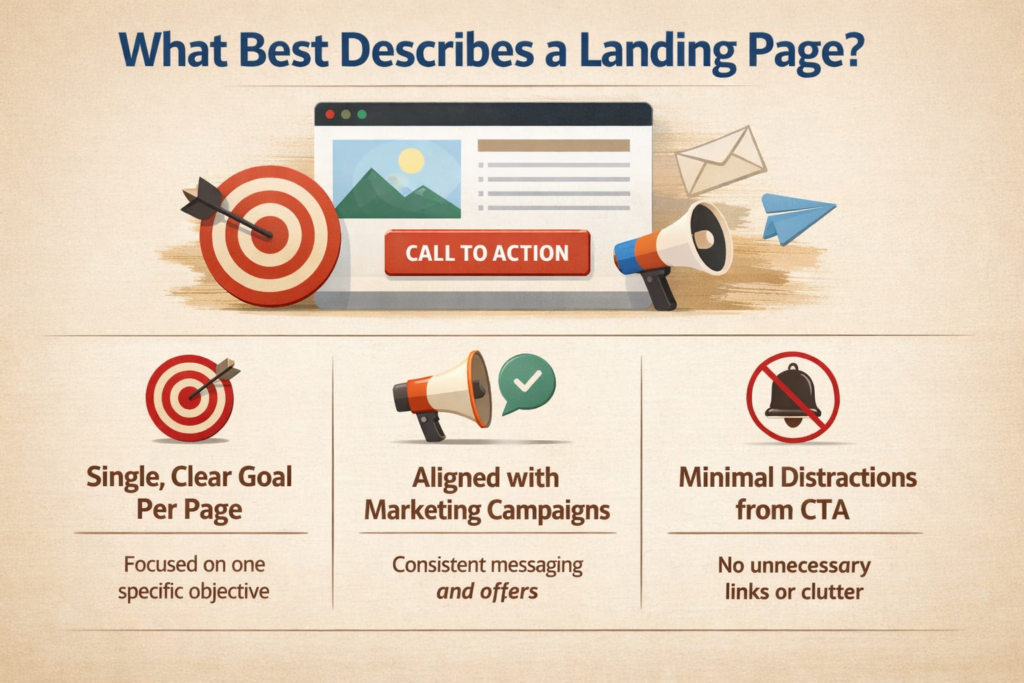
A landing page is a standalone web page specifically designed to achieve one conversion goal. Unlike a homepage, which often serves multiple purposes—like showcasing your products, blog, company info, and news—a landing page has a single, focused objective.
For example, imagine you’re running a back-to-school sneakers campaign. Your landing page should feature only the sneakers in question, highlighting their features, benefits, and purchase options. If you send visitors to a generic product page where they must scroll through dozens of options, they may feel overwhelmed or misled—and you risk losing conversions.
Key takeaways:
- Single, clear goal per page
- Content aligned with marketing campaigns
- Minimal distractions from primary call-to-action (CTA)
For more on crafting effective landing pages, check out HubSpot’s Landing Page Guide.
What Is the Landing Page Experience?
Understanding attributes describe which attributes describe a good landing page experience is essential for marketers. Google defines it as “whether your landing page is likely to provide a good experience to customers who click your ad and land on your website.”
In simple terms, it’s about making sure your visitors find exactly what they expect—and are happy when they do. If your page underdelivers, users bounce, and Google notes it. A poor landing page experience can hurt your Quality Score, increase cost-per-click, and reduce ad visibility.
Core Components of a Good Landing Page Experience:
- Relevance to user intent: Align your page with the user’s expectation from the ad or link.
- Clarity and readability: Visitors should instantly understand your offer and next steps.
- Trust and transparency: Include social proof, contact info, and privacy policies.
- Mobile responsiveness and speed: Ensure a seamless experience across all devices.
When Google sees that users stay longer on your page, engage with content, and click your CTA, it signals that you provide a positive landing page experience which attributes describe a good landing page experience.
What Are the 7 C’s of a Website?
To further enhance your landing page, consider applying the 7 C’s of a website, a framework for building user-focused pages:
- Content: Relevant, original, and engaging content aligned with your visitor’s expectations.
- Context: Visual design, layout, and style that enhance readability.
- Community: Social elements like reviews, testimonials, and forums.
- Customization: Tailor experiences based on user behavior or audience segments.
- Communication: Clear messaging with concise headlines, subheads, and CTA guidance.
- Connection: Links to relevant resources, social media, or related content.
- Commerce: Seamless e-commerce experience with easy-to-use forms or checkout.
Applying these 7 C’s ensures your landing page provides a complete, user-centric experience that meets both Google’s expectations and your business goals. For a detailed breakdown, see Luna metrics 7 C’s Frame work Essential which attributes describe a good landing page experience.
How to Improve Your Landing Page Experience
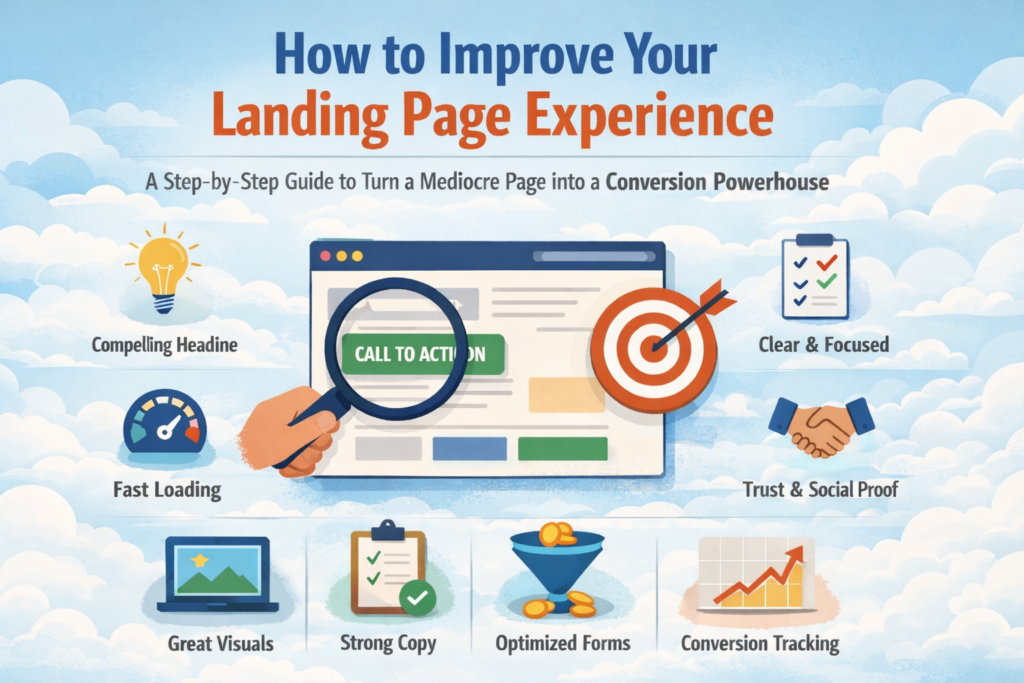
which attributes describe a good landing page experience? Here’s a step-by-step approach to turn a mediocre page into a conversion powerhouse.
Step 1: Define Your Goal
Every landing page should have one primary objective. Be it lead generation, sales, or webinar sign-ups, all elements—copy, images, buttons—must support this goal.
Example anecdote: A SaaS company noticed low conversion rates on its homepage. After creating separate landing pages for a free trial and a demo, conversions increased by 68% in just one month. Focus matters which attributes describe a good landing page experience.
Step 2: Align Your Message
Match your page copy with your ad or link messaging. Headlines should echo the ad, subheads should reinforce benefits, and visuals must align with user expectations.
For instance, if your ad promotes “Eco-Friendly Sneakers,” your landing page should showcase eco-friendly features, images of the shoes, and related customer stories.
Resources: Word Stream on Landing Page Relevance
Step 3: Simplify Navigation
Distracting menus, pop-ups, and extra links reduce conversion rates. Focus on one clear CTA above the fold.
Tips:
- Minimal header and footer links
- Whitespace around your CTA
- Visual cues like arrows pointing to your form
Step 4: Optimize Forms
Forms are the conversion gate. Too many fields scare users away. Ask only for essential info—like name, email, or a simple question.
Pro tip: Use multi-step forms to make it feel less overwhelming. Tools like Typeform or involve.me can help.
Step 5: Build Trust and Transparency
Trust signals are critical. Include:
- Customer testimonials
- Trust badges (secure checkout, SSL certificates)
- Transparent pricing
- Clear contact info and privacy policy
Without trust, even the best offers fail.
Resource: Nielsen Norman Group on Trust and Credibility
Step 6: Optimize for Mobile
With over 63% of searches from mobile devices, a responsive design isn’t optional. Ensure:
- No horizontal scrolling
- Large, tappable buttons
- Clear, concise copy
Check mobile responsiveness with Google Mobile-Friendly Test.
Step 7: Speed Up Your Page
Page load speed is crucial. Visitors will abandon pages that take longer than 3 seconds.
Tips:
- Compress images
- Minify CSS and JavaScript
- Use fast, reliable hosting
Learn more: Google PageSpeed Insights
Step 8: Test and Iterate
Landing pages are never “finished.” Use A/B testing to experiment with:
- Headlines
- CTA buttons
- Images and videos
- Form placements
Tools like Unbounce and Optimizely help refine your pages continuously.
What Are the 5 Elements to a Good Website Design?
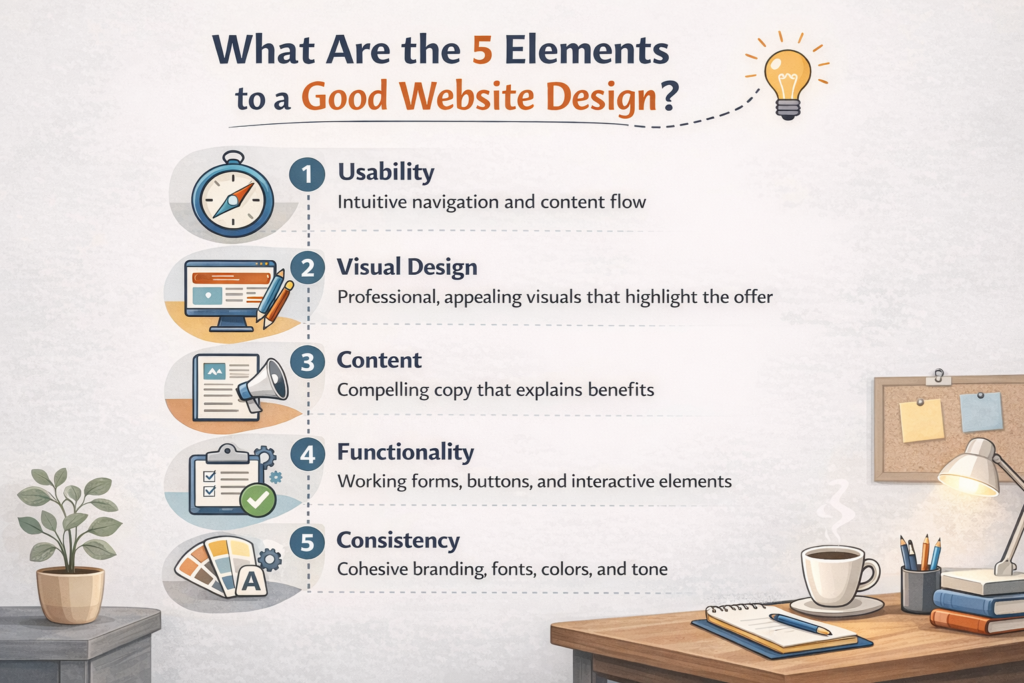
For a landing page to truly excel, it should also follow the 5 elements to a good website design:
- Usability: Intuitive navigation and content flow.
- Visual Design: Professional, appealing visuals that highlight the offer.
- Content: Compelling copy that explains benefits.
- Functionality: Working forms, buttons, and interactive elements.
- Consistency: Cohesive branding, fonts, colors, and tone.
These elements ensure which attributes describe a good landing page experience is seamless, visually appealing, and conversion-oriented.
Resource: Smashing Magazine on Website Design
What Are the 7 Pillars of Personal Branding?
If you’re using landing pages for personal marketing or thought leadership, integrating the 7 pillars of personal branding can help boost credibility:
- Expertise: Showcase knowledge with case studies or whitepapers.
- Authenticity: Be transparent and genuine.
- Consistency: Align visuals and messaging across all pages.
- Visibility: Make your achievements and offerings prominent.
- Storytelling: Use anecdotes to connect emotionally.
- Networking: Include social proof and professional connections.
- Value Delivery: Always provide meaningful content to visitors.
For a personal brand, trust and credibility directly impact conversions.
Resource: Forbes on Personal Branding
Step-by-Step Checklist for a High-Converting Landing Page
Here’s a practical checklist to ensure your page hits all the marks:
- Single, clear objective
- Relevant, attention-grabbing headline
- Copy that aligns with ad intent
- Strong CTA above the fold
- Optimized, short forms
- Social proof and trust signals
- Mobile-friendly and fast loading
- Analytics tracking and A/B testing
- Consistent branding and design
Using this checklist ensures your landing page is conversion-ready and Google-approved attributes describe a good landing page experience.
Conclusion
Answering the question of which attributes describe a good landing page experience isn’t complicated—it’s about clarity, relevance, trust, speed, and continuous optimization.
A well-designed landing page:
- Delivers on ad promises
- Guides users to one action
- Builds trust and credibility
- Is fast, responsive, and mobile-ready
- Continuously improves through testing and feedback
Invest in tools like Unbounce, Instapage, or Typeform to simplify page creation.
By implementing these strategies, your landing pages won’t just capture clicks—they’ll convert visitors into loyal customers, reduce advertising costs, and boost your overall online presence.
Now, the next time someone asks you “which attributes describe a good landing page experience?”, you’ll have a complete roadmap to answer with confidence—and build pages that truly work.
fAQ’S..
Which attributes describe a good landing page experience?
A good landing page is fast, visually appealing, mobile-friendly, and easy to navigate. It has a clear headline, persuasive content, strong call-to-action (CTA), minimal distractions, and builds trust with users.
What are the essential elements of a successful landing page?
Key elements include a compelling headline, engaging visuals, concise copy, clear CTA, trust signals (reviews, testimonials), and a simple layout that guides users toward conversion.
What are the 7 principles of a landing page?
The 7 principles: clear headline, focused purpose, strong CTA, user-centric design, fast loading, mobile optimization, and trust-building elements.
What makes the best landing page?
The best landing page is goal-focused, visually clean, persuasive, mobile-friendly, fast-loading, and guides visitors to take a single, clear action effectively.
What are the three types of landing pages?
The three types: lead generation pages (collect user info), click-through pages (encourage next step), and product/service pages (promote purchases or subscriptions).
What are the components of a landing page?
Components include headline, subhead line, visuals, persuasive copy, CTA, trust signals, form (if applicable), and minimal navigation to keep users focused.