The world of search is rapidly evolving. Traditional SEO methods are no longer enough. With the rise of generative AI platforms like ChatGPT, Perplexity, and Google AI Overviews, how people discover, consume, and interact with information has fundamentally changed. Users no longer scroll through pages—they want immediate, precise answers, and your brand must be part of those answers to remain visible.
In this guide, we explore what strategies improve brand visibility in AI search engines, providing practical, step-by-step guidance, real-life anecdotes, and expert insights to help your brand thrive in the AI-driven search era.
Why AI Visibility Is Critical
Imagine this: a potential client asks ChatGPT about the best software to manage social media campaigns. Even if your website ranks #1 on Google, AI might reference another brand cited across multiple authoritative sources. In this scenario, your brand is invisible in the AI-generated answer—losing a key opportunity what strategies improve brand visibility in ai search engines.
Research indicates that AI-referred web sessions grew 527% in early 2025, highlighting the mainstream adoption of AI platforms for discovery. Additionally, studies show that 83% of AI citations come from sources outside traditional top-10 search results, meaning high SEO rankings alone no longer guarantee AI visibility.
SEO vs. Generative Engine Optimization (GEO)
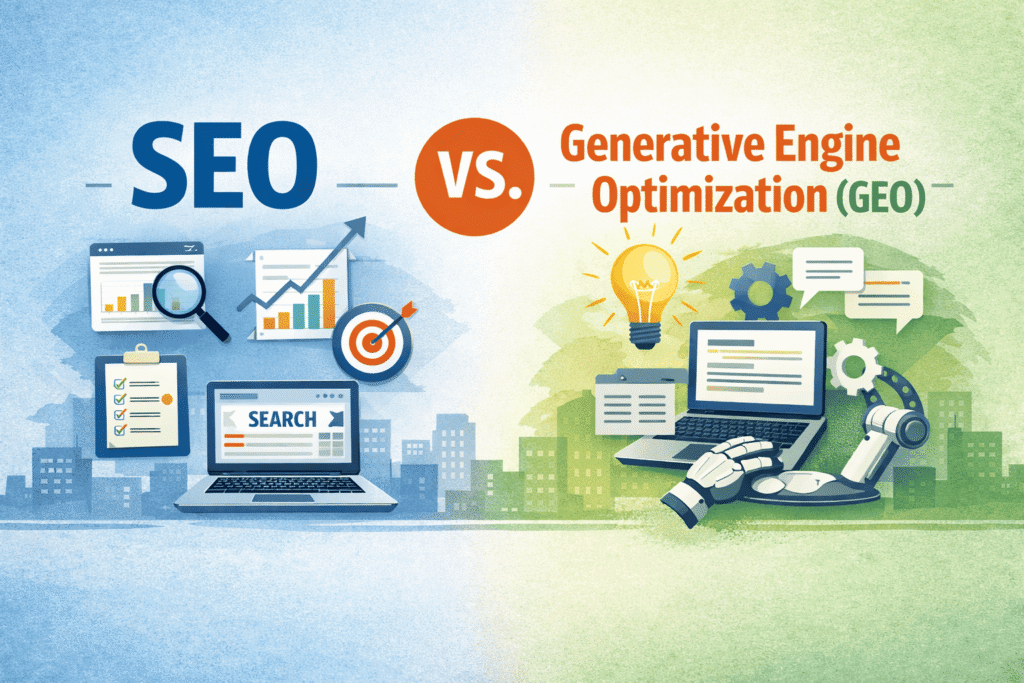
To win in AI search, brands must understand the difference between SEO and GEO what strategies improve brand visibility in ai search engines:
- SEO focuses on ranking for keywords, building backlinks, and increasing domain authority. It drives traffic via SERPs.
- GEO optimizes your content to be cited, synthesized, and trusted by AI platforms. The goal is not just visibility but being included in AI-generated answers.
Analogy: SEO gets your brand in the room, but GEO ensures your brand is part of the conversation.
Step 1: Optimize Content for AI Readability
AI platforms don’t read articles like humans—they extract structured information. To maximize visibility what strategies improve brand visibility in ai search engines:
- Answer-First Architecture
- Start each section with the most important information.
- Example: “The best what strategies improve brand visibility in ai search engines is combining structured content, authoritative sources, and GEO techniques.”
- Atomic Content
- Ensure each paragraph makes sense independently, so AI can reference it accurately.
- Clear, Conversational Language
- Avoid jargon; use simple, human-friendly words.
- Structured Layout
- Organize content with headings, bullet points, and numbered lists.
- Include FAQ sections for AI extraction.
Anecdote: A marketing agency restructured their blog into concise answer blocks with FAQs and saw AI citations double in three months.
Step 2: Build Authority Across the Ecosystem
AI engines prioritize credible, authoritative sources over brand-owned content. To build authority what strategies improve brand visibility in ai search engines:
- Earn Third-Party Mentions
- Get cited by reputable sites like Trustpilot, Reddit, and industry publications.
- Share Original Research
- Unique surveys, statistics, and reports increase AI trust.
- Showcase Expertise
- Highlight team credentials and deep knowledge in content and author bios.
Pro Tip: AI favors informational content over self-promotional content, so focus on educating your audience first.
Read more: E-E-A-T Guidelines
Step 3: Monitor AI Brand Mentions
Tracking AI brand mentions is essential for visibility insights:
- Citation Tracking
- Measure how often your brand is cited compared to competitors. Tools like Cognizo automate this process.
- Sentiment Analysis
- Ensure AI mentions are positive; correct inaccuracies promptly.
- Share of Voice
- Understand your brand’s market presence and target underrepresented areas.
Tip: AI visibility shifts frequently; monthly monitoring ensures timely optimizations.
Step 4: Implement GEO Strategies
GEO makes your content discoverable and citable for AI engines:
A. Structured Data & Schema Markup
- Use FAQPage, HowTo, and Article schemas.
- Structured data helps AI quickly understand and cite content accurately.
B. Contextual Linking
- Link internally and externally to relevant content for conceptual clarity.
C. Tailor Content to Query Intent
- How-to queries: Use bullet points, lists, and steps.
- Analytical queries: Include credible citations and detailed insights.
Anecdote: A B2B SaaS company restructured its FAQs into answer-first sections and appeared in AI Overviews within six weeks, increasing referral traffic by 27%.
D. Refresh Content Regularly
- Update statistics, examples, and insights. AI favors fresh, accurate content.
Step 5: Leverage Organic Social Signals
Social engagement indirectly supports AI visibility:
- Share informational content on LinkedIn, Reddit, and YouTube.
- Likes, comments, and shares signal relevance to AI platforms.
Step 6: Avoid Low-Insight Automated Content
AI deprioritizes content that is prompt-stuffed or purely auto-generated.
- Combine AI drafts with human expertise.
- Focus on thought leadership and real value, not just keywords.
Step 7: Measure, Iterate, and Optimize
AI visibility is dynamic. Track key metrics:
| Metric | What It Measures | Why It Matters | Success Benchmark |
|---|---|---|---|
| Visibility Score | Brand mentions across AI platforms | Shows consistency | Top 5 among competitors |
| Citations | Sources AI references | Guides content strategy | Continuous improvement |
| Sentiment | Tone of AI mentions | Tracks brand perception | Positive overall |
| Share of Voice | Market presence in AI answers | Competitive insights | Maintain top rank |
Use insights to refine content, outreach, and authority-building efforts.
Step 8: Combine SEO and GEO
Integrating SEO and GEO provides maximum visibility:
- SEO ensures high rankings and technical health.
- GEO ensures AI cites your content in answers.
Together, they create a holistic visibility strategy.
Example: A tech startup integrated GEO into its SEO workflow, boosting AI citations by 35% while maintaining top organic search rankings.
Step 9: Step-by-Step Guide to AI Visibility
- Visibility Audit: Query AI platforms and record which brands appear.
- Source Audit: Identify authoritative publications AI cites.
- Build Authority Layer: Structure content with answer blocks and apply schemas.
- Earn Third-Party Coverage: Publish original research quarterly for citations.
- Measurement Cadence: Track visibility, citations, sentiment, and share of voice monthly.
Investing in AI Visibility Tools
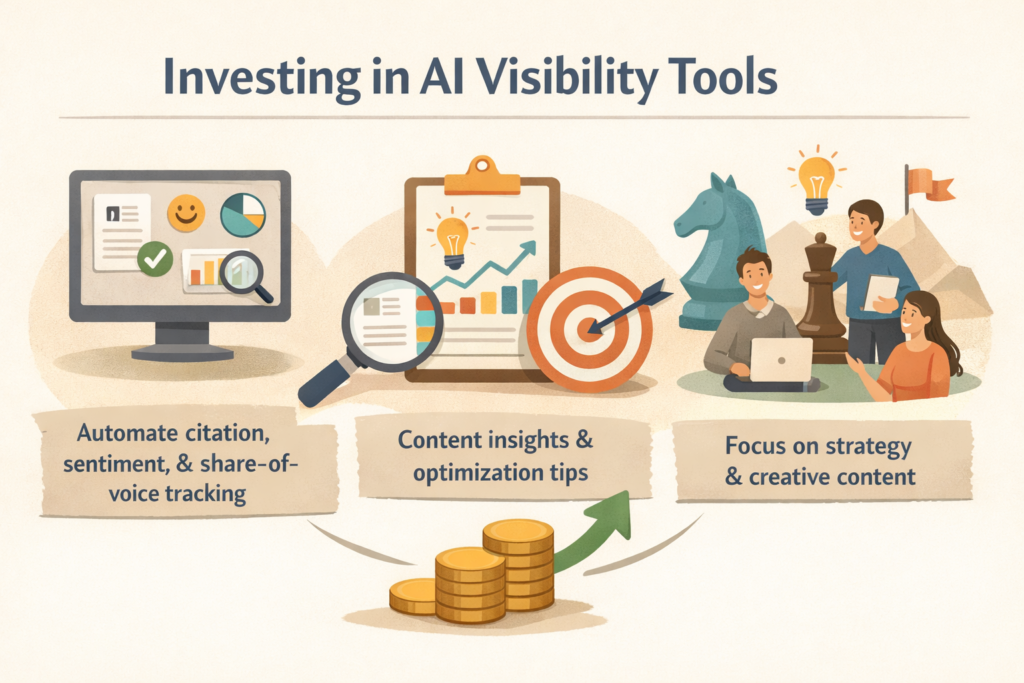
Manual optimization is possible, but AI visibility platforms streamline processes:
- Automate citation, sentiment, and share-of-voice tracking.
- Provide actionable content insights and optimization suggestions.
- Let your team focus on strategy, authority, and creative content.
Platforms like Cognizo simplify AI visibility management for brands.
Map Conversational Keywords
Unlike traditional SEO, AI doesn’t just look for keywords—it interprets full-sentence queries. To align with AI:
- Identify buyer questions: Analyze forums like Reddit, Quora, and social media to find how your audience phrases questions.
- Convert questions into headings: Turn natural language questions into H2 or H3 headings on your page.
- Use variations: Include synonyms and related phrases to cover conversational nuances.
Example: Instead of “best social media software,” use “Which social media software helps small businesses schedule posts efficiently?”
This makes your content AI-friendly and citable.
Optimize for Multi-Source Curation
AI platforms like ChatGPT and Google AI Overviews synthesize information from multiple sources. To increase chances of being included:
- Create complementary content: Break complex topics into supporting guides, case studies, and FAQs.
- Cite and reference other authoritative sources: AI trusts content that interacts with the ecosystem.
- Cross-link your own content: Build a network of related content so AI can see your brand as a hub of knowledge.
Case Study: A B2B SaaS company created 10 interlinked guides on digital marketing automation, earning citations across multiple AI answers and increasing their visibility by 42%.
Leverage Original Research and Thought Leadership
AI engines prefer original insights over aggregated content:
- Conduct surveys, polls, or experiments relevant to your niche.
- Publish results as downloadable reports or interactive dashboards.
- Encourage third-party sites to cite your data.
Example: A marketing consultancy published a quarterly “State of AI Marketing” report, which became a reference for AI platforms and industry articles, cementing its authority.
Use AI Monitoring Tools to Refine Content
Monitoring tools not only track citations—they reveal gaps in your AI visibility:
- Detect emerging topics in your niche.
- Identify incorrect information AI may associate with your brand.
- Analyze sentiment trends to adapt messaging.
Tools like Cognizo or SEMrush’s AI Toolkit help brands quickly pivot content strategy based on real-time AI visibility insights.
Build Long-Term Brand Authority
AI visibility is cumulative. Brands that consistently provide valuable content and original insights become preferred sources. Long-term strategies include what strategies improve brand visibility in ai search engines:
- Develop pillar content ecosystems: Central guides supported by multiple articles, case studies, and FAQs.
- Earn citations in authoritative media: Think niche industry publications, LinkedIn thought leadership posts, and podcasts.
- Maintain consistent messaging: AI learns patterns—consistent, clear voice improves credibility.
- Invest in community engagement: Engage on relevant forums or Q&A platforms where AI indexes content.
Anecdote: A healthcare startup consistently published educational blog posts and whitepapers. Over 18 months, AI citations in ChatGPT answers about health tools grew from zero to over 60% of mentions in its category.
Incorporate Multimedia for AI Context
AI doesn’t only read text; it also references videos, charts, and interactive content:
- Add explanatory videos to your guides.
- Use charts and infographics for statistical content.
- Apply alt text and video transcripts to increase AI readability.
Tip: Platforms like Google’s AI Overviews often cite visual data embedded in authoritative articles, so adding rich media can improve visibility.
Optimize for Voice and Conversational Search
AI search often overlaps with voice search. Preparing content for spoken queries improves your chances of appearing in AI answers:
- Write in natural language, mimicking how people speak.
- Answer specific questions in short, 40-60 word blocks at the top of sections.
- Include FAQ pages and HowTo guides, which AI can easily reference.
Foster Cross-Platform Authority Signals
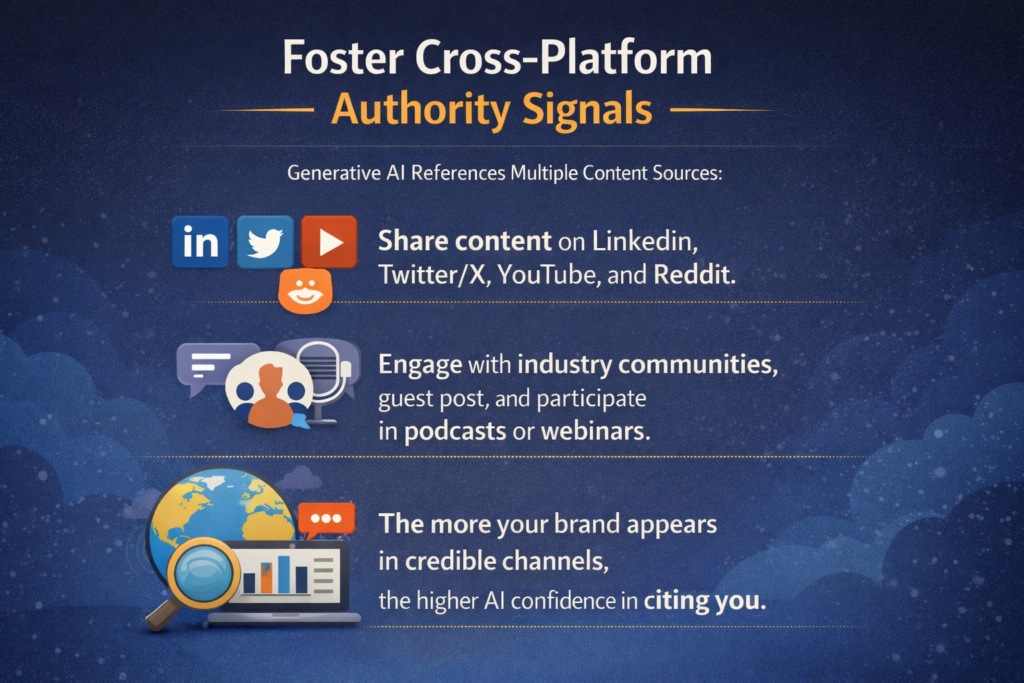
Generative AI references multiple content sources:
- Share content on LinkedIn, Twitter/X, YouTube, and Reddit.
- Engage with industry communities, guest post, and participate in podcasts or webinars.
- The more your brand appears in credible channels, the higher AI confidence in citing you.
Example: A software company increased its AI visibility by publishing industry guides on Medium, LinkedIn, and Slideshare, creating a multi-platform citation network what strategies improve brand visibility in ai search engines.
Create Evergreen Content That Evolves
AI favors content that is constantly refreshed what strategies improve brand visibility in ai search engines:
- Update guides and FAQs with latest statistics, examples, and insights.
- Repurpose top-performing posts into new formats like videos, infographics, and case studies.
- Archive outdated content or merge it into updated guides to maintain credibility.
Tip: AI engines reduce the weight of stale content, so content lifecycle management is crucial for long-term visibility.
Integrate GEO and AI Strategy into Marketing Workflow
Finally, ensure AI visibility becomes a core part of your marketing operations:
- Include GEO steps in content planning and editorial calendars.
- Train teams to write answer-first content and apply schema consistently.
- Review AI visibility metrics during quarterly performance meetings.
- Use insights to inform product launches, campaigns, and PR initiatives.
Brands that integrate GEO into their workflow see faster ROI and consistent AI citations across platforms.
Conclusion
what strategies improve brand visibility in ai search engines The brands that dominate AI search aren’t necessarily those with the most content—they are the ones who:
- Understand how AI engines retrieve and synthesize information
- Build a trusted authority layer across their ecosystem
- Structure content for easy AI extraction and citation
- Monitor, iterate, and evolve their AI visibility strategy regularly
By following these advanced strategies, your brand can move from invisible to indispensable in AI search engines, increasing engagement, authority, and ultimately, revenue.
Call to Action: Start your AI visibility audit today with a tool like Cognizo and see how often your brand is cited in AI answers. Early adoption compounds advantage—don’t wait to be discovered by AI.
FAQ’S..
How to improve brand visibility?
Focus on consistent content creation, SEO optimization, and active social media presence. Build authority through backlinks, collaborations, and audience engagement. Use multiple platforms to expand reach and maintain a strong, recognizable brand voice.
How to improve brand visibility in AI search engines?
Create high-quality, structured content that answers user intent clearly. Build authority through mentions across trusted platforms, optimize for semantic search, and ensure your brand appears in credible sources that AI models rely on.
What are effective strategies for optimizing content for AI search engines?
Use clear headings, natural language, and entity-based SEO. Provide accurate, helpful answers and update content regularly. Add structured data, improve readability, and publish across multiple platforms to strengthen authority signals.
What are the 4 types of marketing strategies?
The four main types are product strategy, pricing strategy, promotion strategy, and distribution (place) strategy. Together, they form the marketing mix used to reach and convert target audiences effectively.