
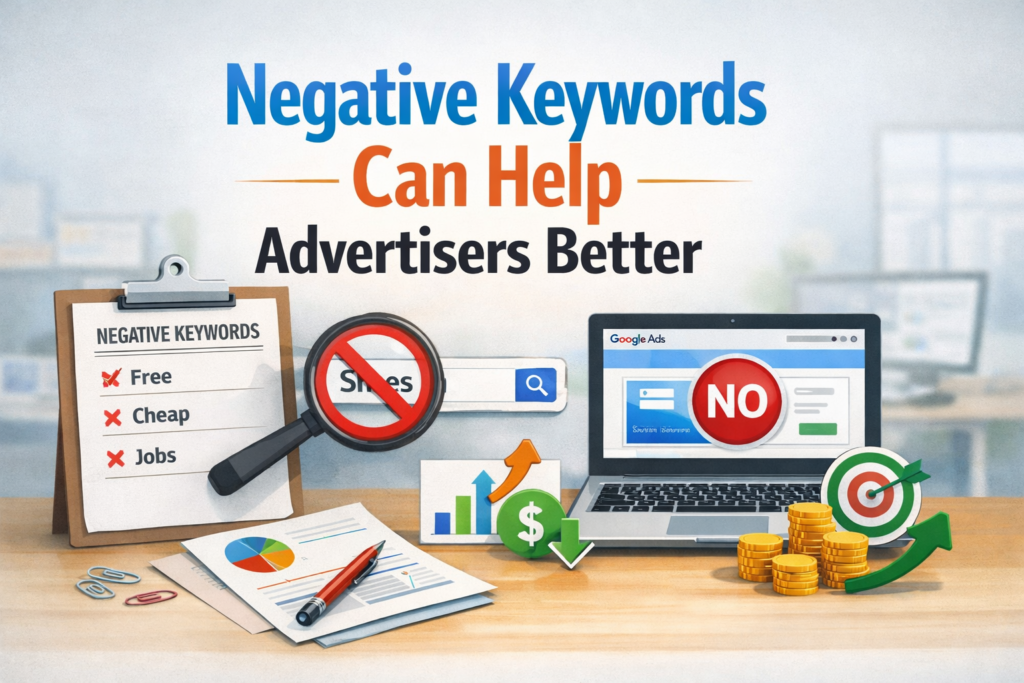
In modern digital marketing, success is not just about reaching more people — it is about reaching the right people. That is exactly why negative keywords can help advertisers better control traffic quality, reduce wasted spending, and improve overall campaign performance.
Think of advertising like running a physical store. Imagine you own a premium running shoes shop. If people keep entering your shop asking for cheap used shoes, shoe repair services, or kids’ school shoes, they may not buy anything. They are just browsing. Similarly, in pay-per-click (PPC) advertising, irrelevant clicks waste budget. This is where negative keywords can help advertisers better manage marketing efficiency.
Imagine running an online store selling premium business software. If your ads keep appearing for searches like free software download or software crack tools, you will waste money on users who are not ready to buy. This is where negative keywords can help advertisers better optimize their campaigns.
Negative Keywords Can Help Advertisers Better Target Customers
The first and most important advantage of negative keywords can help advertisers better target the right audience is improved precision.
According to PPC advertising best practices, negative keywords act as a smart filtering system that blocks irrelevant search traffic.
For example:
- If you sell luxury watches → Add negative keywords like:
- cheap
- repair
- second hand
- fake watches
Using negative keywords can help advertisers better target customers who have buying intent instead of just browsing intent.
Think of PPC marketing like running a restaurant. You want customers who are hungry — not people just walking around looking at menus without buying food.
Negative Keywords List: Building Strong Campaign Foundations
A negative keywords list is a collection of words you want to exclude from your campaigns.
Creating a strong negative keywords list is essential in search engine marketing (SEM) strategies.
Common Categories for Negative Keywords List
1. Price-related searches
- free
- cheap
- discount
- low cost
2. Information-based searches
- tutorial
- guide
- how to
- learn
3. Job-related searches
- careers
- internship
- jobs
Maintaining a strong negative keywords list ensures better ad targeting and improves marketing ROI.
Learn more about PPC marketing!
Negative Keywords Example: Real Business Scenarios
Let’s look at a practical negative keywords example to understand how this works in real marketing campaigns.
Example 1 — Ecommerce Store
If you sell premium shoes:
Add negative keywords:
- cheap shoes
- free shoes
- shoe repair
Example 2 — Online Courses
If you sell paid courses:
Add negative keywords:
- free course
- YouTube tutorial
- beginner only
These negative keywords example strategies help attract serious buyers.
Google Ads Negative Keywords List: How to Manage Campaigns
The Google Ads negative keywords list can be managed from your advertising dashboard.
Steps to manage Google Ads negative keywords list:
- Login to Google Ads
- Open Campaign Settings
- Select Keywords Section
- Click Negative Keywords
- Add your keyword exclusions
Using Google Ads negative keywords list properly allows advertisers to scale campaigns safely.
How to Add Negative Keywords in Google Ads
Learning how to add negative keywords in Google Ads is very simple.
Step-by-Step Guide
Step 1: Open Google Ads dashboard
Step 2: Go to Campaigns
Step 3: Select Keywords Menu
Step 4: Click + Add Negative Keywords
Step 5: Save Changes
By following this process, negative keywords can help advertisers better control campaign performance.
How to Remove Negative Keywords from Google Ads
Sometimes advertisers need to learn how to remove negative keywords from Google Ads when targeting becomes too strict.
Steps:
- Open campaign settings
- Select Negative Keywords
- Choose unwanted keywords
- Click Delete or Remove
Be careful because removing too many negative keywords can increase irrelevant clicks.
Negative Keywords in Digital Marketing: Modern Advertising Strategy
Negative keywords in digital marketing play an important role across multiple advertising channels including search, display, and video ads.
Digital marketing includes:
- Search marketing
- Social media ads
- Content marketing
Using negative keywords in digital marketing improves audience segmentation.
Learn digital marketing basics!
Benefits include:
- Better brand visibility
- Higher engagement
- Stronger customer targeting
Why Are Negative Keywords Important in Advertising?
Understanding why are negative keywords important is critical for business growth.
They help advertisers:
- Reduce wasted ad spending
- Improve CTR (Click-through rate)
- Increase quality score
- Boost conversion rates
Advanced Strategies for Using Negative Keywords
Professional advertisers use advanced optimization techniques.
Monitor Search Terms Reports
Check which searches trigger ads and exclude irrelevant ones.
Build Industry-Specific Keyword Lists
Different businesses require different negative keyword strategies.
Combine SEO and PPC Data
Use organic search trends to improve PPC campaigns.
Learn SEO fundamentals!
Negative Keywords Can Help Advertisers Better Improve ROI
One of the strongest reasons negative keywords can help advertisers better is improved return on investment.
Smart advertising is not about reaching everyone. It is about reaching people who are ready to buy.
Marketing success depends on:
- Targeting precision
- Budget efficiency
- Customer intent matching
Common Mistakes Advertisers Should Avoid
Even though negative keywords can help advertisers better, mistakes still happen.
Avoid these mistakes:
Adding too many negative keywords
Ignoring misspellings and variations
Not checking campaign performance regularly
Remember that marketing trends change frequently.
Negative Keywords in Display and Video Advertising
You can also use negative keywords in digital marketing for:
- Display ads
- Video ads
Although targeting precision is lower, they still help reduce irrelevant impressions.
Learn about display advertising!
Conclusion
In today’s competitive advertising world, negative keywords can help advertisers better control marketing performance and improve profitability.
Successful marketers follow this formula:
- Research keywords carefully
- Build strong negative keyword lists
- Monitor campaigns regularly
- Optimize continuously
Remember, successful advertising is not about showing ads everywhere. It is about showing ads to the right people at the right time.
Start using negative keywords can help advertisers better optimize your campaigns today and watch your business grow with smarter marketing decisions.
FAQ’s..
What are the benefits of negative keywords?
Negative keywords improve ad targeting, reduce wasted clicks, save advertising budget, and increase ROI. They help ads reach only interested users, improving conversion rates and campaign performance by filtering irrelevant search traffic.
What are negative keywords in advertising?
Negative keywords are words or phrases that prevent ads from showing on irrelevant searches. They help advertisers control where ads appear, improve relevance, and reduce unnecessary ad spend while attracting more qualified potential customers.
Is negative advertising effective?
Negative advertising can be effective for brand awareness or political campaigns but may sometimes damage brand reputation. Positive, value-based advertising usually works better for long-term customer trust and loyalty.
What are positive keywords vs negative keywords?
Positive keywords trigger ads when searched, while negative keywords block ads from irrelevant searches. Positive keywords attract traffic; negative keywords filter traffic to improve campaign efficiency and marketing performance.
How to use negative keywords effectively?
Use search term reports, research competitor keywords, update lists regularly, and select proper match types. Avoid over blocking keywords to maintain good reach while filtering low-quality traffic.
What is one negative impact of advertising?
One negative impact is ad fatigue, where users become annoyed seeing too many ads. It can reduce engagement, damage brand perception, and lower marketing effectiveness over time.
Does negative SEO still work?
Negative SEO attempts to harm competitors’ rankings but is less effective today due to advanced search engine protections. Focus on ethical SEO strategies for long-term, sustainable ranking growth.