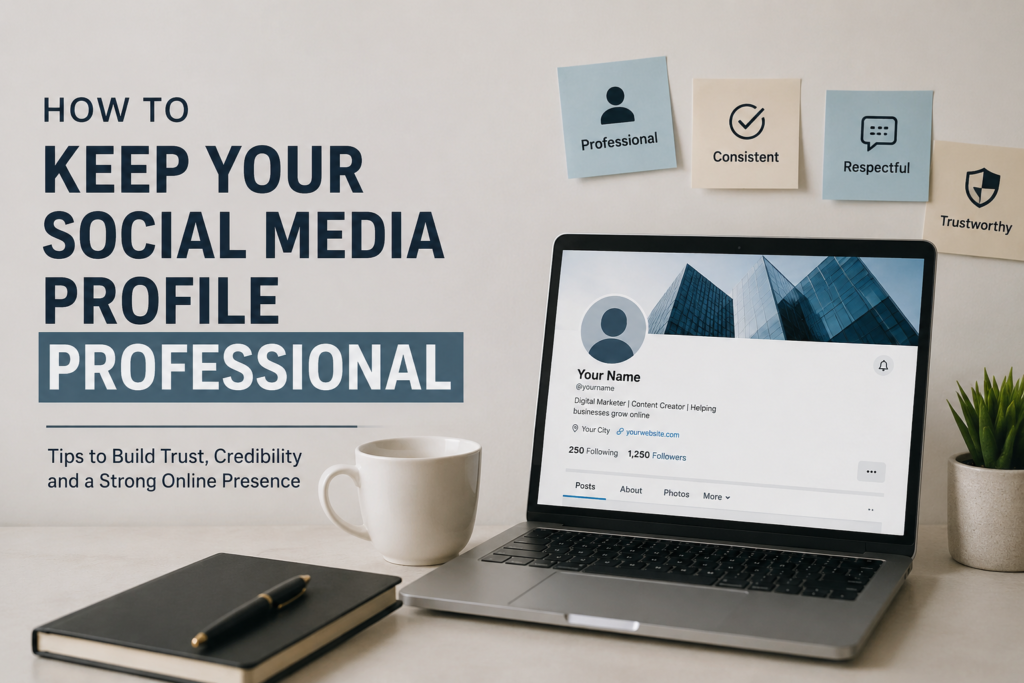
Your social media profile can say a lot about you before you ever speak to a recruiter, client, colleague, or professional contact. That is why learning how to keep your social media profile professional is an important part of managing your online presence.
A professional profile does not mean you have to make every post formal or remove your personality. Instead, it means presenting yourself thoughtfully, communicating respectfully, and making sure the content connected to your name supports the image you want others to see.
Whether you use LinkedIn, Facebook, Instagram, X, or another platform, the same basic principle applies: think about how your content may look to someone discovering you for the first time. A carefully managed profile can help you build connections, demonstrate your interests and knowledge, and create a stronger professional online presence.
This guide explains how to keep your social media profile professional use social media wisely and responsibly, how to communicate professionally through social media, and how to review your profiles step by step.
What Is Professional Use of Social Media?
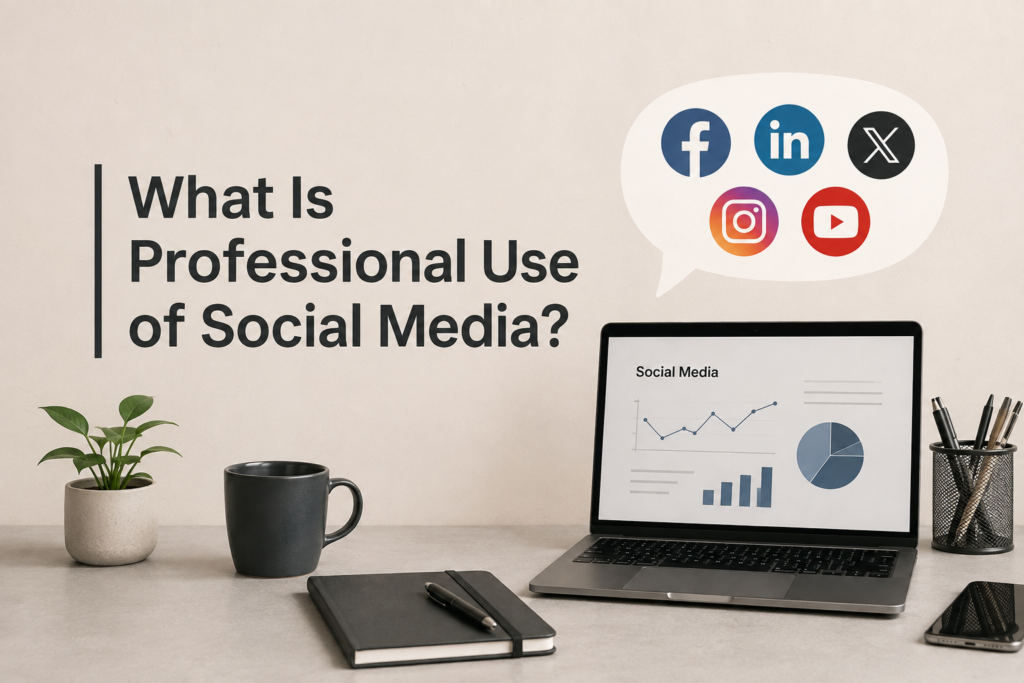
how to keep your social media profile professional means using online platforms in a way that supports your career, education, business interests, professional relationships, or personal brand.
For example, a professional social media account might be used to share useful industry information, discuss your interests, celebrate an achievement, connect with people in your field, or learn about new opportunities. LinkedIn is particularly focused on professional networking. LinkedIn describes a personal profile as a professional page where people can manage their personal brand, display experience and achievements, and connect with professional contacts. However, professional social media use is not limited to LinkedIn. Facebook, Instagram, X, YouTube, and other platforms can also support professional networking when they are used thoughtfully.
The learn how to keep your social media profile professional key difference is purpose. Instead of posting without thinking about the audience or possible consequences, you consider what your content communicates about you.
Imagine that a recruiter searches your name five minutes before an interview. They see your profile picture, biography, recent posts, comments, shared articles, and interactions. What impression would those items create?
That simple question is a useful starting point for managing your online identity.
How to Keep Your Social Media Profile Professional From the Start
The first step in how to keep your social media profile professional is to review what people can see when they visit your account.
Look at your profile as if you were a stranger. Do your name, profile photo, biography, employment information, interests, and recent posts make sense together?
A professional profile does not need to look perfect. It simply needs to be clear, accurate, and appropriate for the audience you want to reach. Your profile should also represent you honestly. For example, LinkedIn advises members to accurately represent their identity, employment history, education, and other professional information. This is important because credibility is difficult to build and easy to lose.
If your profile says that you have experience you do not actually have, changing your job title to something misleading, or presenting someone else’s work as your own, the problem goes beyond appearance. It can damage trust. Instead, focus on presenting your real experience in a clear and confident way.
How to Use Social Media Wisely When Building Your Online Image
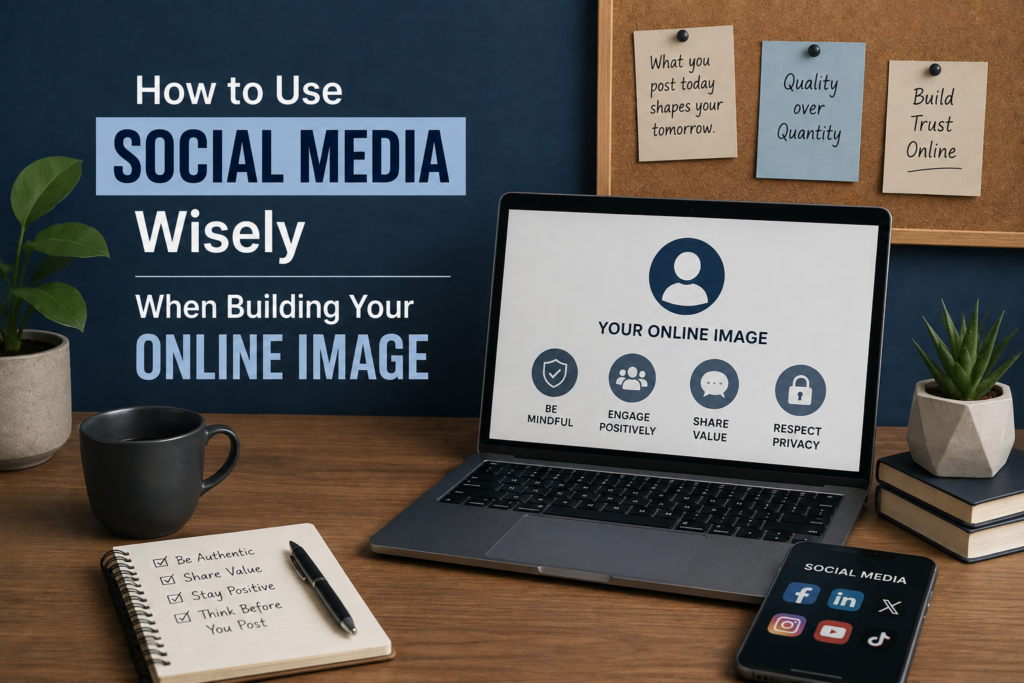
Knowing how to keep your social media profile professional wisely starts with understanding that every post becomes part of your digital footprint.
You do not have to avoid personal interests. In fact, personality can make a profile more interesting. The goal is to balance personal expression with good judgment. For example, imagine someone who works in graphic design and regularly shares design ideas, useful resources, creative projects, and occasional photographs from everyday life. Their account can feel human while still showing a clear professional identity.
Now imagine the same person constantly posting angry complaints about coworkers, arguing with strangers, and sharing content that could easily be misunderstood by a potential client. The difference is not the platform. It is the way the account is managed.
Before posting, ask yourself whether the content is something you would be comfortable discussing with a teacher, employer, client, colleague, or professional contact. That short pause can prevent many unnecessary problems.
How to Keep Work Comments Positive
One of the clearest lessons from how to keep your social media profile professional guidance is to avoid negative public comments about your workplace, colleagues, or professional relationships.
A frustrated post may feel harmless when you write it. However, someone outside the situation does not know the full story. For example, imagine that you have a difficult day at work and post, “I cannot stand this job anymore.” A few minutes later, you feel better and forget about the post. Months later, however, a prospective employer sees it while reviewing your public profile. They may not know what caused the frustration. They only see the statement.
That is why it is usually better to handle workplace disagreements privately and professionally. If you need to discuss a serious workplace concern, use an appropriate private channel rather than turning social media into a public complaint board.
How to Manage Your Social Media Privacy Settings
Privacy is another important part of how to keep your social media profile professional.
Every platform has different privacy controls, so take time to understand what information is public, what is visible to connections, and what is restricted.
However, privacy settings should not become an excuse to post anything without considering the consequences. A private account can still be seen by people you have accepted as connections or followers. Screenshots can also exist outside the original platform. Therefore, a better approach is to combine sensible privacy settings with responsible posting.
Separate personal and professional accounts when that makes sense for you. You may want one account primarily for professional networking and another for close friends or family. The exact setup depends on your needs, but the goal is to understand who can see your content.
How to Build a Professional Social Media Profile
A strong profile should tell people who you are and what you do without making them work to understand it.
Start with your name and profile image. Then review your biography or headline. On LinkedIn, the introduction section can include information such as your name, photo, background image, headline, current position, education, location, and contact information. Make sure these details are current.
If you have changed roles, update your employment information. If your interests have changed, update your biography where appropriate. LinkedIn also notes that completing recommended profile sections can improve profile discoverability and search appearances. A complete profile does not mean filling every field with unnecessary information. Instead, provide useful details that help visitors understand your professional background.
LinkedIn and Professional Networking
LinkedIn how to keep your social media profile professional is especially useful for people who want to build a professional network.
You can connect with classmates, colleagues, recruiters, industry professionals, organizations, and other people whose work interests you. However, networking is not simply about collecting as many connections as possible. Imagine attending a professional conference. You would not walk into the room, hand hundreds of people a business card, and leave without speaking to anyone.
Social media networking works in a similar way.
Follow people whose work you genuinely find useful. Read their posts. Leave thoughtful comments. Share useful information. When appropriate, start a conversation. LinkedIn recommends using your profile to manage your professional identity and connect with colleagues, recruiters, organizations, and other professional contacts.
That makes meaningful interaction more valuable than simply increasing a follower count.
How to Build Your Professional Network Through Social Media
how to keep your social media profile professional network grows through repeated, genuine interaction.
Start by following people and organizations relevant to your interests. Observe what they publish and how conversations work within your industry. Then begin participating. You might comment on an interesting article, congratulate someone on an achievement, share a useful resource, or ask a thoughtful question.
The idea is similar to joining a conversation in person. You do not need to dominate the discussion. You simply need to contribute something useful. Over time, these small interactions can help people recognize your name and understand what you care about professionally. This is also where personality matters.
A profile that contains only promotional posts can feel distant. Sharing useful experiences, lessons, interests, and observations can make your professional presence more approachable.
How to Create Professional Social Media Content
Good professional content does not have to be complicated.
You can share an article you found useful and explain why you recommend it. You can discuss something you learned. You can share a project, explain a process, or offer a practical observation from your area of interest. The important thing is relevance.
Ask yourself: Would someone in my professional network find this useful, interesting, or helpful?
If the answer is yes, the content probably has a reason to exist. LinkedIn’s own guidance encourages members and Pages to share insights, ideas, and expertise, while also providing tools for posting articles, photos, videos, and reviewing post analytics. This means professional content does not have to follow one fixed format “how to keep your social media profile professional”.
Experiment with different formats while keeping your overall message consistent.
How to Use Hashtags Without Looking Unprofessional
Hashtags can help categorize content and make relevant conversations easier to discover.
However, using too many unrelated hashtags can make a post look like it is trying too hard to gain attention. Instead, use hashtags that genuinely relate to your topic. For example, someone discussing graphic design might use relevant terms connected with design, branding, or creativity rather than adding dozens of unrelated popular tags.
The same principle applies to tagging people and organizations. Tag someone when they are genuinely connected to the content rather than tagging accounts simply to attract attention. Professionalism often comes down to relevance.
How to Use Social Media Wisely When Sharing Personal Content
A professional account does not need to be completely serious.
People have hobbies, interests, families, creative projects, sports, travel experiences, and many other parts of life. Sharing appropriate personal content can make a profile feel more authentic. The key is context. Suppose you are attending an industry event and share a photograph with a short explanation of something interesting you learned. That personal moment also has professional relevance. Likewise, sharing a hobby can reveal personality without compromising professionalism.
The question is not “Is this personal?”
Instead, ask, “Does this content create the kind of impression I want associated with my name?”
That question gives you much more useful guidance.
How to Use Social Media Safely

How to use social media safely involves more than protecting your reputation.
You should also be careful about what personal information you publish. Avoid unnecessarily sharing sensitive details such as private contact information, passwords, financial information, or information that could compromise your account security. Review connected applications and account permissions periodically. Also, be cautious with suspicious messages, links, and unexpected requests.
Professional reputation and account security are connected. If an account becomes compromised, inappropriate content could potentially be published without your knowledge.
For professional accounts, platform rules also matter. For example, X requires Professional Accounts to have complete profiles and authentic identities and expects professional-account activity to comply with its rules. Therefore, staying professional also means understanding the rules of the platforms you use.
How to Keep Your Social Media Profile Professional With a Content Schedule
Consistency can make social media management easier.
You do not need to post every day. Instead, create a realistic routine. For example, you might decide to share professional content once or twice a week and spend a little time during the week engaging with other people’s posts. Scheduling tools can also help organize content in advance. The purpose is not to flood your audience with posts. It is to avoid disappearing for months and then publishing ten updates in one afternoon.
A simple content plan can include educational content, professional observations, industry news, personal interests, and occasional achievements. This variety can keep your profile useful without making it feel repetitive.
A Step-by-Step Social Media Professionalism Check
If you learn how to keep your social media profile professional want a simple way to improve your profiles today, start with a complete review.
First, open each social media account you actively use and look at the profile as a stranger would. Next, check your name, profile image, biography, employment information, links, and contact details. Then review your recent posts and comments. Remove or hide content that no longer represents you where the platform’s controls allow it.
After that, review your privacy settings and decide what you want to share publicly.
Next, check your professional network. Follow relevant professionals, organizations, and credible industry sources. Then review your communication style. Make sure your comments and messages are respectful and useful. Finally, create a simple posting routine that you can actually maintain. Doing all of this at once may take some time, but afterward your account should be much easier to manage.
Common Mistakes That Can Make a Social Media Profile Look Unprofessional
Many social media mistakes are surprisingly small.
A profile may contain outdated employment information. A biography may be unclear. The profile photograph may not fit the purpose of the account. Recent posts may contain repeated complaints or arguments. Another common problem is excessive self-promotion. If every post says “hire me,” “buy this,” or “look at my achievement,” your audience may quickly lose interest.
Instead, balance promotion with useful information.
Another mistake is copying other people’s content without adding anything meaningful. Sharing a useful article is fine, but adding your own explanation can make the post much more valuable. On LinkedIn, the platform specifically advises against misleading profile optimization, keyword stuffing, and inaccurate employment or education information.
In other words, professional optimization should improve clarity rather than manipulate the platform.
Why a Professional Social Media Profile Can Help Your Career
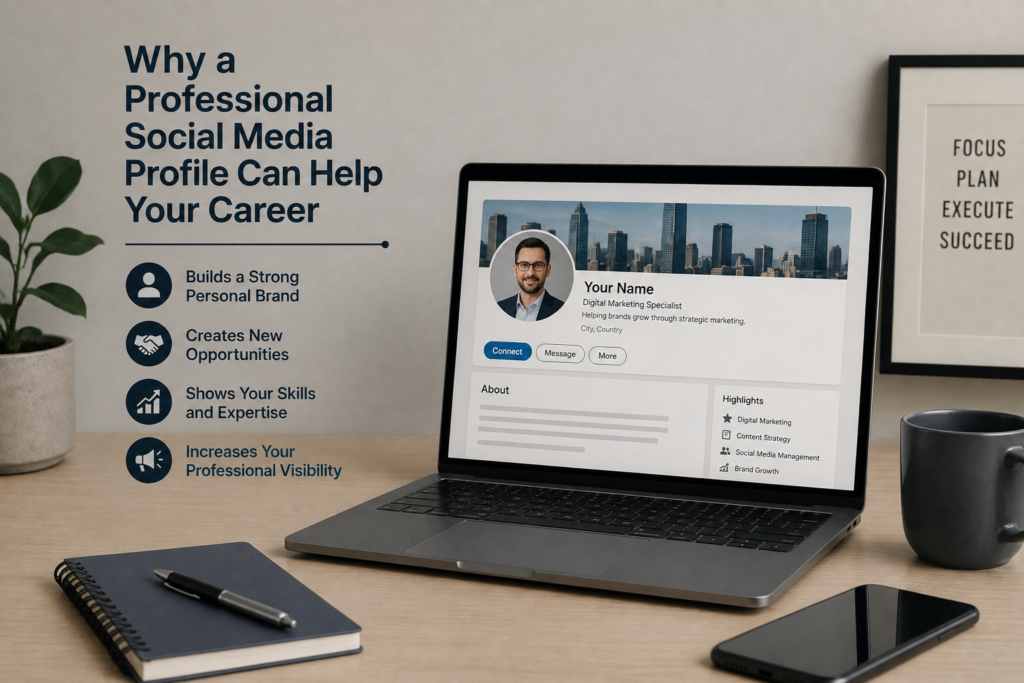
A well-managed account can support several professional goals.
It can help people discover your work, allow you to demonstrate knowledge, create opportunities to connect with others, and give potential employers or clients a clearer picture of your professional interests.
It can also help you learn.
Following experienced professionals exposes you to ideas, discussions, trends, and resources that may not appear in your normal daily routine. Over time, social media can become more than a place where you publish content. It can become a professional learning and networking environment. That is why your profile deserves attention even if you are not currently searching for a job.
Your professional identity is something you can build gradually rather than only when an opportunity appears.
Final Thoughts on How to Keep Your Social Media Profile Professional
Learning how to keep your social media profile professional does not require turning your account into a boring résumé.
The strongest professional profiles usually balance credibility, personality, useful content, respectful communication, and consistency. Start by making your profile accurate and complete. Choose appropriate photographs and review your privacy settings. Then pay attention to what you publish, how you communicate, and who you connect with.
Most importantly, remember that professionalism is not about pretending to be someone else. It is about making thoughtful choices about what you share and how you treat other people online. If you build that habit, your social media presence can become a useful extension of your professional identity rather than something you have to worry about.
A final profile review every few months can keep your information current, your content relevant, and your online presence aligned with your goals. LinkedIn also recommends keeping profiles updated and using the platform to maintain meaningful professional connections.
Your social media profile is part of your digital first impression. Make sure it tells the story you want people to see.
FAQ’S…
How to keep your social media profile professional?
To understand how to keep your social media profile professional, use a clear profile photo, write a professional bio, share useful and appropriate content, avoid offensive posts, and communicate respectfully. Review your privacy settings regularly and check your profile from a professional’s perspective before posting.
Why is Gen Z quietly leaving social media?
Some Gen Z users are reducing their social media use because of concerns about screen time, comparison, privacy, unwanted content, and the pressure to stay constantly connected. However, this does not mean Gen Z has completely abandoned social media. Usage patterns vary by platform and individual.
What social media no longer exists?
Several social platforms have been discontinued or significantly changed over time, including Vine, Google+, and Periscope. This shows why maintaining a professional identity should not depend entirely on one platform. Following the principles of how to keep your social media profile professional can help you adapt when platforms change.
Which social media is losing users?
User numbers change frequently, and different platforms experience growth or decline at different times. Rather than focusing only on which platform is losing users, professionals should choose platforms where their audience is active. A strong profile, useful content, and knowing how to keep your social media profile professional are more important than being everywhere.
What’s a good app to replace social media?
The best alternative depends on what you want from social media. Private messaging apps, discussion forums, professional networking platforms, newsletters, and interest-based communities can provide more focused communication. For career networking, LinkedIn can be a useful option because it is designed around professional connections and industry content.