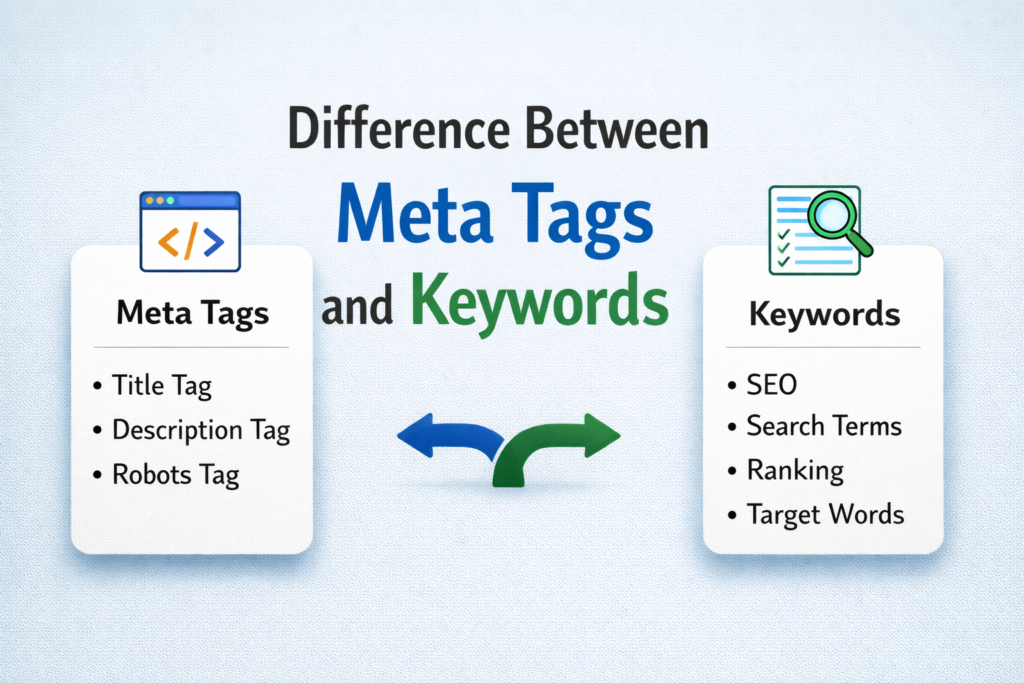
Understanding the Essential Difference Between Meta Tags and Keywords is critical for modern SEO success. In today’s search landscape, websites must focus on both technical optimization and user-focused content strategy. This guide explains everything in simple, practical language while using semantic SEO best practices to help you improve search visibility and marketing performance.
Secondary keywords will be strategically placed in section headlines as requested.
Understanding Meta Tags vs Keywords in SEO Strategy
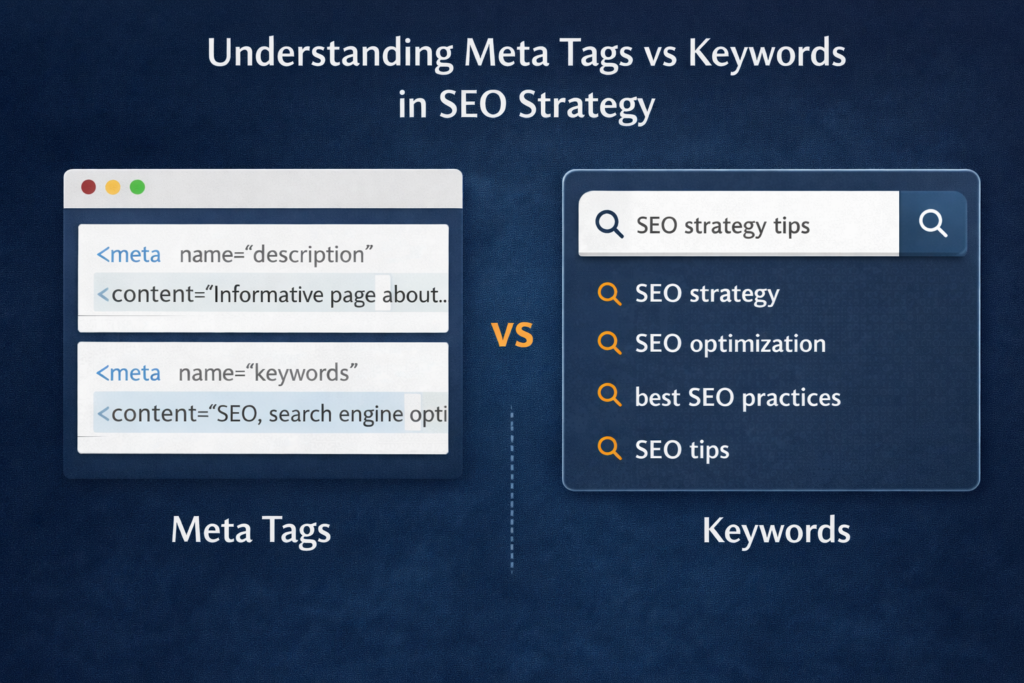
The meta tags vs keywords in SEO debate has evolved significantly over the years. Today, search engines like Google Search rely less on hidden HTML signals and more on real content quality and user engagement.
Meta tags are HTML elements that provide structured information about webpages. Meanwhile, keywords represent the search language users type into search engines when searching for information.
Think of it like running a physical store:
- Meta tags = Store signage and product labels
- Keywords = Customer search questions and needs
The real success comes when both work together to improve discoverability and click-through rates.
Meta Tags Importance in Modern SEO Marketing
The meta tags importance in SEO cannot be ignored even in modern search algorithms.
Important meta tags include:
Title Tag
The title tag is one of the strongest ranking and branding signals. It appears as the blue clickable link in search results.
Example:
Essential Difference Between Meta Tags and Keywords | SEO Guide
Best practices:
- Keep titles under 60 characters
- Include primary keyword at the beginning
Learn more from Moz Title Tag Guide.
Meta Description
The meta description improves user click behavior rather than direct rankings.
Good descriptions:
- Are under 160 characters
- Include emotional or solution-focused language
Example:
Learn the Essential Difference Between Meta Tags and Keywords to improve SEO performance and website traffic.
More details can be found at Google Search Documentation.
Difference Between Keywords and Search Intent Optimization
The modern SEO world focuses heavily on keywords vs search intent rather than raw keyword usage.
Search intent types include:
- Informational intent
- Transactional intent
- Navigational intent
- Commercial intent
For example:
Someone searching for Essential Difference Between Meta Tags and Keywords likely wants educational information rather than product sales pages.
Successful websites match content with user intent before worrying about ranking algorithms.
Learn more from Ahrefs Search Intent Guide.
On Page SEO Optimization Using Meta Tags and Keywords
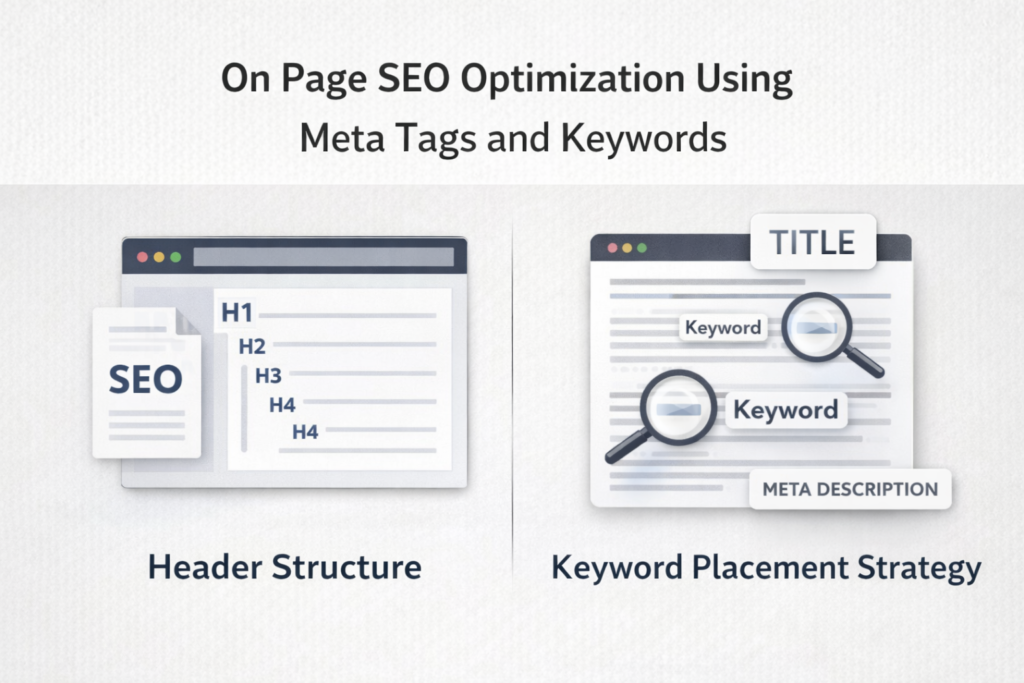
On page SEO optimization is where technical SEO meets content marketing.
Key optimization areas include:
Header Structure
Use logical hierarchy:
- H1 = Main topic
- H2 = Major sections
- H3 = Supporting explanations
This improves readability and crawler indexing.
More details at W3C HTML Structure Guidelines.
Keyword Placement Strategy
Place keywords naturally in:
- First 100 words
- Headings
- Image alt text
Avoid keyword stuffing because modern search algorithms can detect unnatural patterns.
SEO Content Strategy Using Keywords Research Techniques
Strong SEO content strategy always begins with research.
Use tools like:
Focus on:
- Long-tail keywords
- Low competition opportunities
- Buyer intent keywords
Example:
Instead of targeting:
SEO
Target:
Essential Difference Between Meta Tags and Keywords
Long-tail keywords often generate better conversion rates.
Technical SEO vs Content SEO Differences
The battle between technical SEO vs content SEO is actually a misunderstanding.
Both work together:
Technical SEO includes:
- Site speed optimization
- Mobile responsiveness
- Crawlability
Content SEO includes:
- Blog quality
- Keyword optimization
- User engagement signals
Learn more at Google Technical SEO Guide.
Why Businesses Should Care About SEO Traffic Growth
Focusing on SEO traffic growth can dramatically reduce marketing costs.
Benefits include:
- Organic audience acquisition
- Brand trust building
- Higher ROI than paid ads
Unlike paid marketing, SEO builds long-term visibility.
How This Knowledge Helps You Sell Products Online

Strong online marketing SEO strategy combines:
- Keyword research
- Content creation
- Technical optimization
- Conversion optimization
Businesses that master SEO can attract customers 24/7 without constant advertising spending.
Common SEO Mistakes to Avoid
Ignoring Mobile SEO
Use responsive design and viewport meta tags.
Learn more at Google Mobile Test Tool.
Using Duplicate Meta Tags
Every page must have unique title and description tags.
Focusing Only on Rankings
Traffic without conversions is not profitable.
Future Trends in SEO Search Technology
Search technology is evolving toward:
- AI search optimization
- Voice search SEO
- Natural language search
Read more at Google AI Search Updates.
Conclusion
The Essential Difference Between Meta Tags and Keywords is simple but powerful:
- Keywords = User search language
- Meta Tags = Search engine communication and presentation
Modern SEO requires balancing:
- Content quality
- Technical optimization
- User experience
When used correctly, SEO becomes a powerful marketing asset for business growth.
Action Steps to Start Today
Perform keyword research
Write high-quality content
Optimize title and meta description tags
Monitor SEO performance
Consistency is the key to long-term SEO success.
FAQ’s..
What is the difference between a keyword and a meta tag?
A keyword is a word or phrase users type into search engines. A meta tag is an HTML element that provides information about a webpage to search engines. Keywords focus on user intent, while meta tags help search engines understand and display your content properly.
What is the difference between keywords and tags?
Keywords are search terms people use online. Tags (in blogging or CMS platforms) are labels used to organize content on a website. Keywords help with SEO visibility, while tags help structure and categorize content internally.
What is the difference between keyword and metadata?
A keyword is a specific search phrase targeting user intent. Metadata is data about data — it includes elements like title tags and meta descriptions that describe webpage content. Keywords can be included within metadata to improve SEO clarity.
What is an example of a meta tag?
An example of a meta tag is:<meta name="description" content="Learn the difference between meta tags and keywords for better SEO.">
This meta description summarizes webpage content for search engines and users.
Can incorrect meta tags hurt my SEO?
Yes. Incorrect or misleading meta tags can reduce click-through rates and confuse search engines. Duplicate title tags, wrong descriptions, or accidental “no index” tags can negatively impact visibility and rankings.
Which are two types of tags?
Two common types of tags are:
Meta tags (used in HTML for SEO)
Header tags (H1, H2, H3 used to structure content)
Both help search engines understand page hierarchy and content meaning.
What are the two types of keywords?
Two primary types of keywords are:
Short-tail keywords (broad, high volume)
Long-tail keywords (specific, lower competition)
Long-tail keywords often convert better because they match detailed user intent.
Does Google use meta tag keywords?
No. Google does not use the meta keywords tag for ranking. It officially ignores it. However, Google still uses title tags and meta descriptions to understand and display content in search results.