Launching a startup is exciting, but attracting your first loyal customers is often the biggest challenge. Many founders spend thousands of dollars on paid advertising, hoping their campaigns will generate sales. Unfortunately, expensive ads don’t always build trust, especially for brands that people have never heard of.
The beauty of micro influencer engagement strategies for startups is that they help new businesses build credibility much faster. When someone follows a creator because they trust their opinions, a genuine recommendation feels like advice from a friend rather than an advertisement. For example, imagine you’ve created a new eco-friendly water bottle. You could spend $10,000 on one famous influencer, or you could partner with fifteen outdoor adventure creators whose audiences genuinely care about sustainability. In most cases, the second approach produces more conversations, stronger engagement, and higher conversions.
According to the HubSpot Influencer Marketing Guide, smaller creators consistently generate higher engagement rates than many macro influencers because their audiences are more connected and interactive.
For startups with limited budgets, micro influencer engagement strategies for startups provide an opportunity to compete with much larger brands without spending massive amounts on advertising.
What Are Micro Influencer Engagement Strategies for Startups?
Micro influencer engagement strategies for startups are marketing methods that help new businesses partner with creators who typically have between 10,000 and 100,000 followers. These creators have built trust within specific communities, making their recommendations far more authentic than traditional advertisements.
Unlike celebrity influencers, micro influencers focus on particular interests such as:
- Fitness
- Technology
- Beauty
- Fashion
- Home Improvement
- Finance
- Food
- Travel
- Parenting
- SaaS
- Education
This specialization allows startups to reach people who are already interested in their products or services.
Instead of broadcasting your message to millions of random users, micro influencer engagement strategies for startups connect your brand directly with audiences that are much more likely to become customers.
Why Micro Influencer Engagement Strategies for Startups Deliver Better Results
Many startup founders believe bigger influencers automatically produce better results.
In reality, the opposite is often true.
One major reason micro influencer engagement strategies for startups perform so well is audience trust.
Smaller creators spend more time interacting with followers through comments, live sessions, direct messages, and community discussions. Because of this, their followers value their recommendations far more than highly polished celebrity promotions.
Some of the biggest benefits include:
- Higher engagement rates
- Better customer trust
- Lower marketing costs
- Higher conversion rates
- Easier campaign testing
- Better ROI
- More authentic user-generated content
- Stronger niche targeting
For startups, every marketing dollar matters. That’s why micro influencer engagement strategies for startups focus on measurable growth rather than vanity metrics like follower counts.
Why Every Startup Should Consider Micro Influencer Engagement Strategies for Startups
Think about the last product you purchased because someone recommended it.
Chances are it wasn’t because of a television commercial.
It was probably because:
- A YouTuber reviewed it.
- Someone shared it on Instagram.
- A TikTok creator demonstrated it.
- A LinkedIn expert recommended it.
This behavior is exactly why micro influencer engagement strategies for startups continue to outperform many traditional marketing channels.
People buy from people they trust.
Trust builds sales.
Sales grow businesses.
That’s the foundation of successful influencer marketing.
Key Benefits of Micro Influencer Engagement Strategies for Startups
When implemented correctly, micro influencer engagement strategies for startups can help businesses achieve multiple goals at the same time.
1. Affordable Marketing
Instead of paying one influencer thousands of dollars, startups can collaborate with multiple creators using the same budget.
This reduces risk while increasing learning opportunities.
2. Higher Engagement
Micro influencers usually receive more meaningful interactions because their communities are smaller and more engaged.
Their audiences:
- Ask questions
- Leave detailed comments
- Share recommendations
- Save posts
- Visit websites
These interactions often lead to stronger conversion rates.
3. Better Audience Targeting
One of the biggest advantages of micro influencer engagement strategies for startups is precise targeting.
For example:
A skincare startup should partner with skincare creators.
A SaaS startup should collaborate with technology educators.
A fitness startup should work with gym creators.
Matching the creator’s audience with your ideal customer dramatically improves campaign performance.
4. Authentic Recommendations
Consumers are becoming increasingly skeptical of traditional advertising.
However, authentic creator recommendations still influence purchasing decisions because they feel genuine rather than promotional.
This authenticity is one of the strongest reasons micro influencer engagement strategies for startups continue to grow worldwide.
At a Glance
- Micro influencer engagement strategies for startups help brands reach highly targeted audiences.
- Micro influencers usually have between 10K–100K followers.
- Engagement often matters more than follower count.
- Product seeding reduces financial risk.
- Affiliate partnerships improve ROI.
- Long-term collaborations outperform one-time campaigns.
- Campaign tracking helps identify profitable creators.
How to Build Micro Influencer Engagement Strategies for Startups
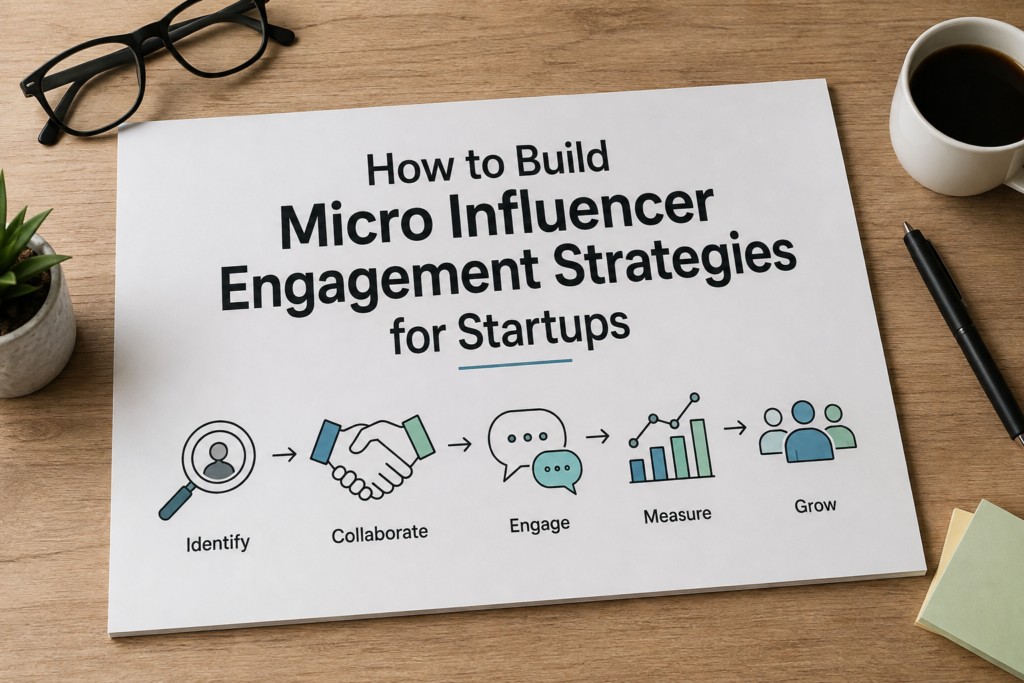
After understanding why micro influencer engagement strategies for startups are so effective, the next step is learning how to implement them successfully. Many startup founders assume influencer marketing is simply about sending products to creators and hoping for the best. In reality, successful campaigns are built on planning, relationship building, and continuous optimization.
The good news is that you don’t need a huge marketing budget. By following a structured approach, micro influencer engagement strategies for startups can generate measurable growth while keeping customer acquisition costs under control.
Step 1: Define Clear Campaign Goals
Every successful campaign begins with a clear objective.
Before contacting any creator, ask yourself:
- Do you want more website visitors?
- Are you trying to increase product sales?
- Do you need app downloads?
- Is your goal brand awareness?
- Do you want to collect email subscribers?
Each objective requires different creators, different content formats, and different success metrics.
For example, if your startup has just launched, brand awareness may be your first priority. However, if you’re preparing for a product launch, driving conversions will likely become the main goal.
Without clear objectives, even the best micro influencer engagement strategies for startups become difficult to measure.
Pro Tip: Set SMART goals (Specific, Measurable, Achievable, Relevant, and Time-bound) before launching your campaign.
Step 2: Identify Your Ideal Customer
One of the biggest mistakes startups make is selecting influencers before understanding their own customers.
Instead, create a simple customer profile.
Consider:
- Age
- Gender
- Country
- Interests
- Occupation
- Income level
- Buying habits
- Favorite social platforms
Imagine you’re selling productivity software for freelancers.
Partnering with a beauty influencer simply because they have high engagement wouldn’t make sense. Instead, a creator who shares freelancing tips or business advice is much more likely to influence your ideal audience.
The better your audience research, the more successful your micro influencer engagement strategies for startups will become.
Step 3: Choose the Right Social Media Platform
Every platform serves a different purpose.
Selecting the right platform is just as important as selecting the right influencer.
| Platform | Best For |
|---|---|
| Lifestyle, fashion, food, beauty, travel | |
| TikTok | Viral product discovery and Gen Z audiences |
| YouTube | Product reviews, tutorials, long-form education |
| B2B startups and SaaS companies | |
| X (Twitter) | Tech, finance, startups, news |
Don’t try to be everywhere.
Focus on the platform where your customers already spend time.
This makes your micro influencer engagement strategies for startups far more effective.
Strategy 1: Start with Product Seeding
One of the safest micro influencer engagement strategies for startups is product seeding.
Instead of paying creators upfront, send them your product with no obligation to post about it.
This approach offers several advantages:
- Lower financial risk
- Honest product feedback
- Authentic user-generated content
- Better creator relationships
- Higher trust among audiences
Creators appreciate brands that allow them to share genuine opinions instead of demanding promotional content.
Example
Imagine you’ve launched a premium organic tea brand.
Instead of paying one macro influencer $5,000, you send your tea collection to twenty wellness creators.
Ten of them genuinely enjoy the product and voluntarily share it with their followers.
Those recommendations often generate stronger engagement because they feel natural rather than sponsored.
This is one of the simplest yet most effective micro influencer engagement strategies for startups, especially for eCommerce brands.
Strategy 2: Build Real Relationships Before Pitching
Many founders make the mistake of contacting creators only when they want something.
Successful brands do the opposite.
Spend time engaging with creators before sending a collaboration request.
You can:
- Follow their accounts.
- Like and comment on their posts.
- Share their content.
- Reply to Stories.
- Congratulate them on milestones.
- Participate in their community discussions.
These small interactions help build familiarity.
When your outreach message finally arrives, you’re no longer a complete stranger.
Relationship building is one of the most overlooked micro influencer engagement strategies for startups, yet it consistently improves response rates.
How to Personalize Your Outreach
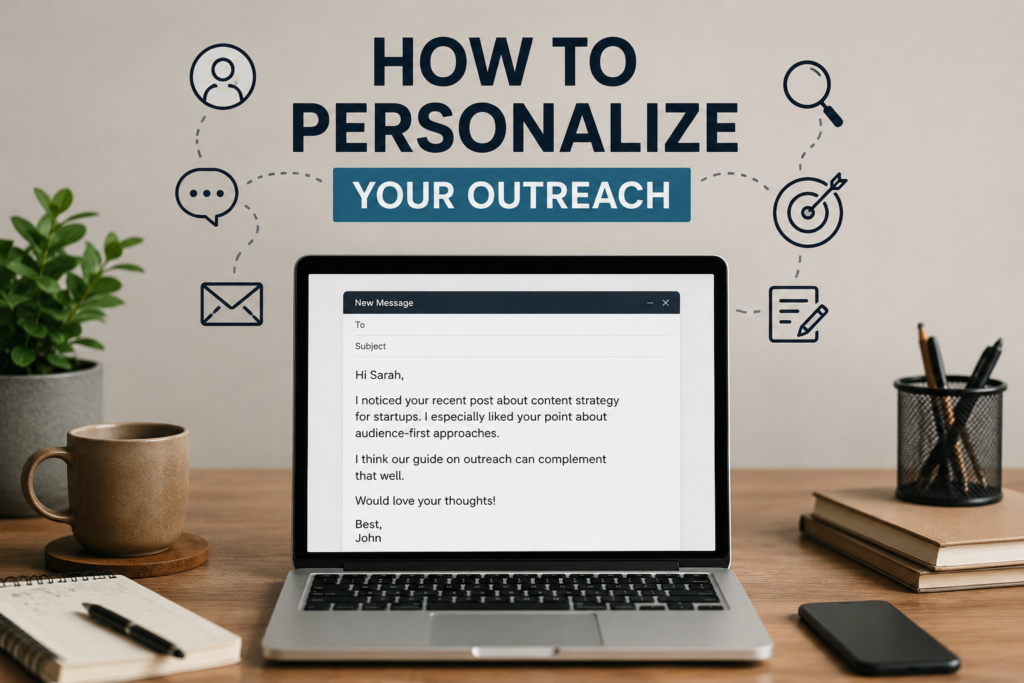
Generic messages rarely work.
Instead, reference something specific.
Poor Outreach
Hi, we’d like to collaborate with you.
Better Outreach
Hi Emma, I really enjoyed your recent Reel about sustainable kitchen products. Your audience clearly values eco-friendly living, which aligns perfectly with our reusable food storage containers. We’d love to send you a sample and explore a long-term collaboration if you think it’s a good fit.
The second message immediately feels more genuine because it demonstrates you’ve actually invested time in learning about the creator.
Strategy 3: Offer Affiliate Partnerships
Affiliate marketing is another powerful component of micro influencer engagement strategies for startups.
Rather than paying large fees upfront, creators earn a commission whenever someone purchases using their unique referral link or discount code.
This creates a win-win situation.
Benefits for Startups
- Lower upfront costs
- Easier ROI tracking
- Performance-based spending
- Motivated creators
- Long-term partnerships
Benefits for Creators
- Recurring income
- Greater earning potential
- Ongoing collaboration opportunities
- Stronger brand relationships
Why Hybrid Compensation Performs Better
Many experienced creators prefer hybrid compensation instead of commission alone.
A typical structure might include:
- Small upfront payment
- 15–20% affiliate commission
- Performance bonus for reaching sales milestones
This approach rewards creators fairly while protecting startup budgets.
As a result, hybrid models have become one of the fastest-growing micro influencer engagement strategies for startups because both parties benefit from campaign success.
Strategy 4: Launch a Micro-Influencer Ambassador Program
One of the smartest micro influencer engagement strategies for startups is building a small ambassador program instead of relying on one-time sponsored posts. Long-term collaborations create familiarity, and familiarity builds trust.
Instead of paying different creators every month, invite your top-performing influencers to become brand ambassadors. Offer them exclusive benefits such as:
- Monthly product launches
- Early access to new features
- Personalized discount codes
- Affiliate commissions
- Performance bonuses
- VIP community access
For example, a fitness startup could partner with five fitness coaches for an entire year rather than hiring a new influencer every month. As those coaches repeatedly mention the brand, their followers begin recognizing and trusting it. This repeated exposure often leads to much higher conversions than a single sponsored post.
An ambassador program transforms micro influencer engagement strategies for startups from short-term campaigns into a sustainable growth engine.
Strategy 5: Turn Your Existing Customers into Micro Influencers
Many founders overlook one of the most valuable resources they already have—their customers.
Some of your happiest customers may already be posting about your products on Instagram, TikTok, or YouTube. Instead of constantly searching for new creators, identify loyal customers who genuinely love your brand.
Encourage them by offering:
- Free products
- Referral rewards
- Affiliate commissions
- Exclusive previews
- Community recognition
This approach strengthens micro influencer engagement strategies for startups because authentic customer recommendations carry tremendous credibility.
Real-World Example
Imagine a startup selling handmade candles. Several customers begin sharing aesthetic photos of the candles in their homes. Rather than hiring new creators, the startup invites these customers into an ambassador program. The result is authentic content, stronger customer loyalty, and lower marketing costs.
Strategy 6: Give Creators Creative Freedom
One of the fastest ways to ruin micro influencer engagement strategies for startups is to micromanage creators.
Influencers understand their audience far better than brands do.
Instead of providing a rigid script, give creators:
- Product information
- Brand values
- Campaign objectives
- Key talking points
- Required disclosures
- Brand assets
Then allow them to tell the story in their own voice.
Authenticity is the reason people follow creators. If every post sounds like a corporate advertisement, audiences quickly lose interest.
Remember:
Guide creators. Don’t control them.
Strategy 7: Track Every Campaign Like a Data Scientist
Successful micro influencer engagement strategies for startups rely on data rather than assumptions.
Every creator should receive unique tracking resources, including:
- UTM parameters
- Affiliate links
- Discount codes
- Dedicated landing pages
This makes it easy to identify which creators actually generate revenue.
Essential Metrics
| Metric | Why It Matters |
|---|---|
| Engagement Rate | Measures audience interaction |
| Click-Through Rate (CTR) | Indicates content effectiveness |
| Conversion Rate | Shows how many visitors become customers |
| Cost Per Acquisition (CPA) | Measures campaign efficiency |
| Return on Investment (ROI) | Determines overall profitability |
| Revenue Per Creator | Identifies your best partnerships |
Tracking these KPIs allows you to continuously improve your micro influencer engagement strategies for startups.
Strategy 8: Repurpose Influencer Content Across Marketing Channels
One collaboration can produce weeks of marketing content.
With permission from creators, reuse influencer-generated content on:
- Product pages
- Landing pages
- Email newsletters
- Facebook Ads
- Instagram Ads
- TikTok Ads
- Blog articles
User-generated content consistently outperforms highly polished advertisements because it feels genuine.
Repurposing content significantly increases the ROI of micro influencer engagement strategies for startups without increasing your marketing budget.
Common Mistakes That Hurt Micro Influencer Engagement Strategies for Startups
Even promising campaigns fail when startups repeat the same mistakes.
Avoid these common pitfalls.
Choosing Influencers Based Only on Follower Count
Large audiences don’t guarantee sales.
Instead, evaluate:
- Engagement quality
- Audience relevance
- Comment authenticity
- Brand alignment
A creator with 15,000 highly engaged followers can outperform someone with 500,000 inactive followers.
Ignoring Fake Followers
Before signing any agreement, review audience authenticity.
Look for warning signs such as:
- Sudden follower spikes
- Low engagement
- Generic comments
- Suspicious growth patterns
Protecting your budget is an essential part of micro influencer engagement strategies for startups.
Over-Scripting Creator Content
Audiences recognize scripted advertisements immediately.
Provide guidance—not word-for-word instructions.
Authentic storytelling almost always produces better results.
Failing to Measure Results
Never judge success based solely on likes.
Instead, evaluate:
- Website traffic
- Sales
- Lead generation
- Email signups
- Cost per acquisition
- Customer lifetime value
The best micro influencer engagement strategies for startups always focus on measurable business outcomes.
Recommended Tools for Micro Influencer Campaigns
The right tools make campaign management much easier.
| Tool | Purpose |
|---|---|
| HypeAuditor | Audience authenticity analysis |
| Modash | Creator discovery |
| Upfluence | Influencer database |
| Aspire | Campaign management |
| Google Analytics | Website analytics |
| Google Tag Manager | Conversion tracking |
| Bitly | Link management |
These tools help automate many aspects of micro influencer engagement strategies for startups, saving valuable time for lean marketing teams.
Mini Success Story
A startup selling reusable kitchen organizers had a limited monthly marketing budget of $4,000.
Instead of hiring one celebrity influencer, the company partnered with twelve micro influencers across Instagram and TikTok.
Each creator received:
- A free product package
- A unique discount code
- A personalized affiliate link
- Creative freedom to showcase the product naturally
After three months:
- Organic website traffic increased significantly.
- Sales nearly doubled.
- Customer acquisition costs decreased.
- User-generated content became the brand’s highest-performing advertising asset.
This success wasn’t the result of luck. It came from following proven micro influencer engagement strategies for startups and continuously optimizing campaign performance.
Conclusion
Implementing successful micro influencer engagement strategies for startups isn’t about partnering with the biggest influencers—it’s about building meaningful relationships with creators whose audiences genuinely trust them.
Start small. Test multiple creators. Measure every campaign carefully. Invest more in the partnerships that consistently generate results.
Over time, these proven micro influencer engagement strategies for startups will help your business increase brand awareness, attract qualified customers, reduce acquisition costs, and maximize long-term return on investment.
Rather than chasing vanity metrics, focus on authenticity, consistency, and continuous improvement. That’s how modern startups build lasting brands in an increasingly competitive digital marketplace.
FAQ’S…
What are the best micro influencer engagement strategies for startups?
The most effective micro influencer engagement strategies for startups include product seeding, personalized outreach, affiliate partnerships, ambassador programs, customer advocacy, creator freedom, and data-driven campaign optimization.
How many micro influencers should a startup work with?
Most startups should begin with 5–10 carefully selected creators. This provides enough performance data to identify successful partnerships before increasing investment.
Should startups pay influencers or offer free products?
Many startups begin with product gifting and later transition to paid or hybrid collaborations once creators consistently generate results.
How can startups measure influencer marketing ROI?
Website traffic
Revenue
Affiliate sales
Conversion rate
Cost per acquisition
Customer lifetime value
Return on investment
These metrics reveal whether your micro influencer engagement strategies for startups are delivering sustainable growth.