
Search Engine Optimization (SEO) can seem like a mysterious puzzle for many small business owners. You build a website, post some content, and expect customers to flood in—but weeks turn to months, and traffic barely moves. If this sounds familiar, you are not alone.
Many small businesses invest time and resources into SEO, yet fail to see results. Often, this is not bad luck—it’s caused by mistakes small business owners make when using SEO.
The truth is, SEO is not about shortcuts. It’s about strategy, patience, and executing the right practices consistently. In this guide, we’ll explore the most common mistakes small business owners make when using SEO, their impact on rankings, and—most importantly—how to fix them step by step.
By the end, you’ll know how to turn SEO into a growth engine that attracts the right customers to your business.
Why SEO for Small Businesses Is Critical
Before we discuss mistakes, it’s important to understand why SEO for small businesses matters.
When someone searches for your products or services on Google, most never go past the first page. According to Backlinko, the first result gets almost 28% of clicks, while the second gets 15%, and the third drops further.
This means if your business isn’t ranking high in Google search results, potential customers may never find you.
Good SEO strategies help you:
- Generate organic traffic
- Build brand credibility and trust
- Increase sales and leads
- Compete with larger companies
Yet, many businesses sabotage their own SEO efforts without realizing it. Let’s explore the main mistakes small business owners make when using SEO and how to avoid them.
Mistake #1: Launching SEO Without a Clear Strategy
One of the biggest mistakes small business owners make when using SEO is jumping in without a plan. Many think SEO is simply adding keywords or posting blogs. But without a structured strategy, your efforts often go to waste.
A Real Story
A bakery owner once spent six months posting dessert recipes on her website. While the posts attracted readers from around the world, none became customers. Why? Because her business was local, and her SEO strategy didn’t target local searchers.
How to Fix This
Step 1: Conduct a Full SEO Audit
Use tools like Ahrefs SEO Audit or SEMRush Site Audit to check:
- Broken links
- Slow-loading pages
- Missing meta tags
- Indexing issues
Step 2: Define Target Keywords
Identify what customers are actually searching for with tools like:
Focus on long-tail keywords (e.g., “affordable SEO services for small businesses”) rather than broad terms like “SEO.”
Step 3: Build an SEO Roadmap
Your roadmap should include:
- Content plan for blogs and service pages
- Technical SEO fixes
- Link building strategy
- Performance tracking
Without a plan, SEO becomes guesswork.
Mistake #2: Ignoring Keyword Research
Many small business owners guess their keywords, which rarely works. Targeting the wrong phrases results in low traffic and missed opportunities.
Example
A plumbing company optimized its website for “professional plumbing solutions”, but customers were searching for “emergency plumber near me.” The mismatch meant low traffic and wasted effort.
How to Fix It
Perform proper keyword research using tools and data:
- Check Google Search Console to see which keywords drive traffic
- Analyze competitors’ keywords
- Prioritize keywords with:
- Strong search intent
- Moderate competition
- Relevance to your business
Targeting the right keywords ensures qualified traffic—not just random visitors.
Mistake #3: Publishing Low-Quality Content
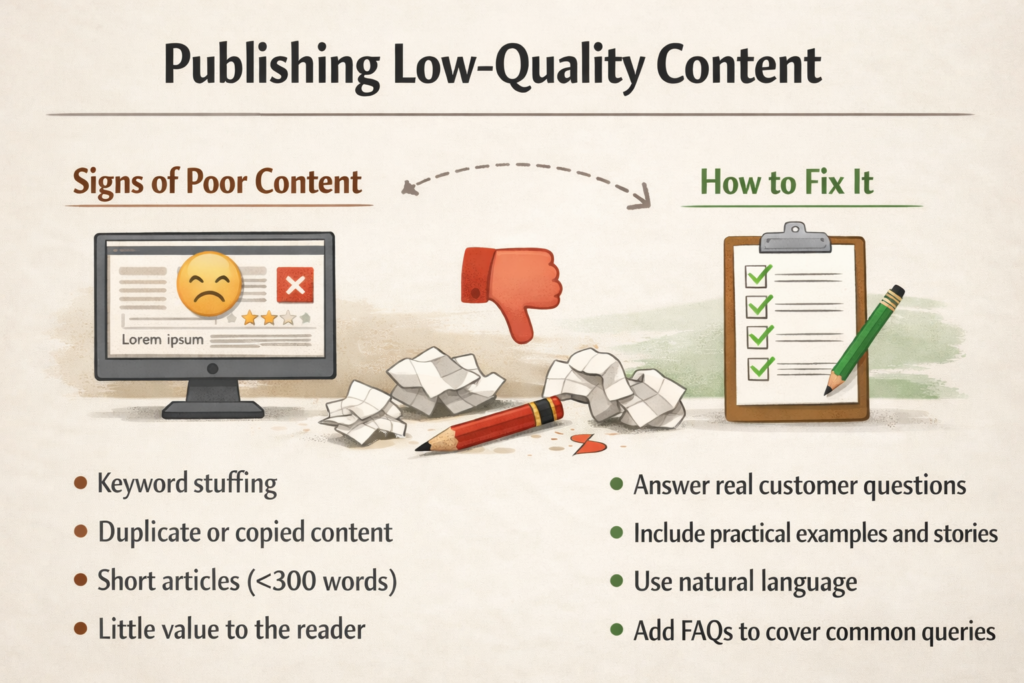
Your content is the backbone of on-page SEO, but many small businesses create thin, rushed content. Google now prioritizes helpful, high-quality content over keyword-stuffed pages.
Signs of Poor Content
- Keyword stuffing
- Duplicate or copied content
- Short articles (<300 words)
- Little value to the reader
How to Fix It
Focus on content optimization:
- Answer real customer questions
- Include practical examples and stories
- Use natural language
- Add FAQs to cover common queries
- Include product/service descriptions
For example, instead of:
“Best SEO services SEO services SEO services.”
Write:
“How affordable SEO services can help small businesses grow online.”
This improves readability and boosts SEO rankings.
Mistake #4: Neglecting Local SEO
Many small businesses rely on local customers yet ignore local SEO, which can lead to missed opportunities. Without local optimization, your business may not appear in:
- Google Maps
- Local search results
- Nearby search queries
A Quick Story
A small restaurant had low online visibility. After setting up a Google Business Profile and optimizing it with accurate NAP info, photos, and reviews, their traffic increased significantly.
How to Fix It
- Create or claim your Google Business Profile
- Add accurate Name, Address, Phone (NAP)
- Include business hours and high-quality photos
- Encourage positive customer reviews
Local SEO ensures your business appears when nearby customers are searching.
Mistake #5: Ignoring Mobile Optimization
Over 60% of web traffic comes from mobile devices (Statista). Websites that aren’t mobile-friendly see high bounce rates and low rankings.
How to Fix It
- Use responsive design
- Test with Google Mobile-Friendly Test
- Optimize loading speed and image sizes
- Make buttons touch-friendly and navigation easy
Mobile optimization improves user experience and SEO performance.
Mistake #6: Slow Website Speed
Visitors leave slow websites. Page speed impacts user experience and Google rankings. Test speed with Google PageSpeed Insights.
How to Fix It
- Compress images
- Use fast hosting
- Enable browser caching
- Minimize scripts
Faster websites help retain visitors and improve SEO results.
Mistake #7: Ignoring Technical SEO
Technical issues prevent search engines from crawling your site efficiently. Common problems include:
- Missing XML sitemap
- Blocked pages in robots.txt
- Crawl errors
- Broken links
Step-by-Step Fix
- Create an XML sitemap
- Submit it to Google Search Console
- Fix crawl errors
- Ensure proper site structure
Technical SEO ensures your content is visible to search engines.
Mistake #8: Not Building Backlinks
Backlinks signal trust to Google. Websites with quality links rank higher. Many small businesses overlook link building.
How to Build Backlinks
- Guest posting on industry blogs
- Digital PR campaigns
- Broken link building
- Publishing valuable resources
Backlinks improve authority, traffic, and SEO rankings.
Mistake #9: Focusing Only on Traffic Instead of Conversions
High traffic doesn’t guarantee sales. Many business owners track visits but neglect conversion rate optimization (CRO) (Optimizely).
Ways to Improve Conversions
- Clear call-to-action buttons
- Fast checkout or inquiry process
- Visible trust signals
- Customer testimonials
Conversions ensure your SEO efforts translate into real revenue.
Mistake #10: Ignoring Analytics and Data Tracking
SEO requires data-driven decisions. Many Mistakes Small Business Owners Make When Using SEO:
- Optimizing for the wrong keywords
- Wasting time on pages that don’t convert
- Missing opportunities for improvement
How to Track Data
Use free tools like:
Monitor:
- Clicks and impressions
- Keyword rankings
- Page performance
- User behavior
- Local search visibility
Analyzing data helps refine strategy and boost SEO effectiveness Mistakes Small Business Owners Make When Using SEO.
A Step-by-Step SEO Roadmap for Small Businesses
Feeling overwhelmed? Follow this SEO roadmap:
- Fix Technical SEO – Ensure crawlability, site speed, and structure
- Perform Keyword Research – Focus on long-tail, intent-driven keywords
- Publish High-Quality Content – Include blogs, FAQs, service pages
- Optimize Local SEO – Set up Google Business Profile
- Build Backlinks – Guest posts, partnerships, digital PR
- Track and Analyze Performance – Use Google Analytics and Search Console
How Professional SEO Services Can Help
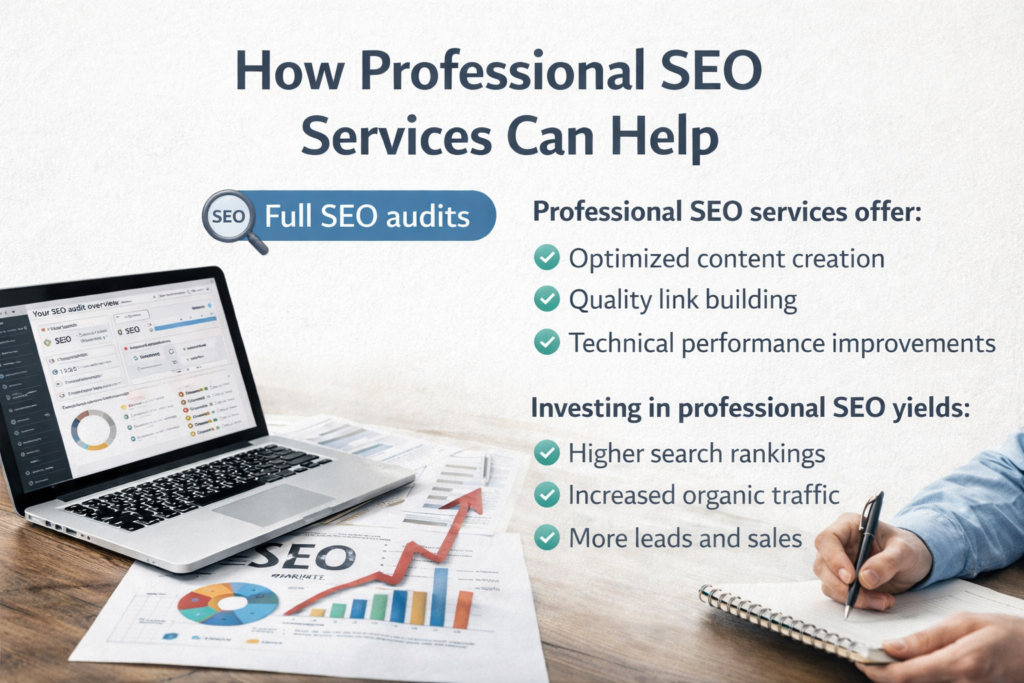
Managing SEO alone is challenging. Professional SEO services offer:
- Full SEO audits
- Optimized content creation
- Quality link building
- Technical performance improvements
Investing in professional SEO yields:
- Higher search rankings
- Increased organic traffic
- More leads and sales
Conclusion
Many small businesses struggle because of simple mistakes. The most common mistakes small business owners make when using SEO include:
- Lack of strategy
- Poor keyword research
- Low-quality content
- Ignoring local SEO
- Slow website performance
- Weak backlink profiles
- Neglecting mobile optimization and analytics
The good news? These mistakes are fixable. By prioritizing high-quality content, solid technical SEO, and a clear SEO strategy, small businesses can improve rankings, attract qualified customers, and grow sustainably.
Start correcting these mistakes today, and watch your website become your most powerful marketing tool.
FAQ’S..
What are the most common SEO mistakes?
Common mistakes include keyword stuffing, ignoring search intent, poor-quality content, lack of backlinks, slow website speed, and not optimizing for mobile. Many also skip technical SEO and fail to update outdated content regularly.
What is the biggest mistake small businesses make?
The biggest mistake is not having a clear strategy. Many businesses jump into marketing without defined goals, audience targeting, or consistent branding, which leads to wasted time and money.